

Rural Broadband Just Moved From Plans to Construction. Here's What That Means for Your Town
In 2026, the federal government approved a broadband plan for every state and territory — all seven states Communities Unlimited works in included. That unlocked a share of $42.45 billion to connect rural homes and businesses that still don’t have reliable internet. The planning is finished. Rural broadband construction is next. And the build phase is where your community either gets connected or gets left at the edge of the map.
If you lead a rural town, sit on a county board, run a water system, or own a business that runs on the internet, this is the moment to pay attention. Here’s what changed, what happens now, and what you can do while the work is underway.
Quick answer
- What happened: In 2026, the National Telecommunications and Information Administration (NTIA) approved all 56 state and territory broadband plans under the BEAD program — the Broadband Equity, Access, and Deployment program. That covers Arkansas, Oklahoma, Tennessee, Louisiana, Mississippi, Texas, and Alabama.
- The money: $42.45 billion nationwide to build internet service to homes and businesses that don’t have it.
- What’s next: Construction. States sign contracts with internet providers, providers pull permits and lay the lines, and homes get connected.
- The timeline: The law gives each provider up to four years to finish the networks they’re paid to build.
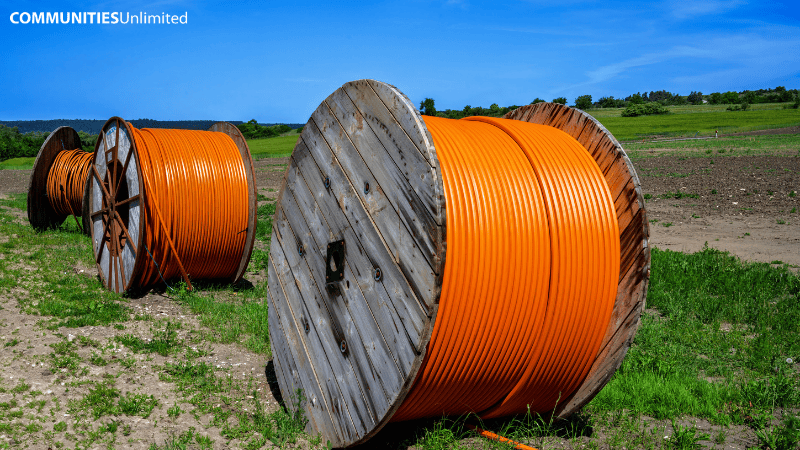
What is BEAD, in plain words?
BEAD is the largest federal push ever to close the rural internet gap. Congress set aside $42.45 billion, split it among the states, and told each state to write a plan for reaching the addresses that still have no service or slow service. Every state’s plan is now approved.
A 2025 rule change let states use more than one kind of technology. Most locations will get fiber, the fastest and longest-lasting option. Some harder-to-reach spots will get fixed wireless or satellite instead. In two CU states, reporting shows fiber reaching a large majority of eligible locations: roughly 80% in Louisiana and about 86% in Mississippi.
What "construction phase" actually means
“Construction phase” sounds simple. On the ground, rural broadband construction is a chain of steps, and each one takes time.
First, your state broadband office signs agreements with the internet providers that won the work. States have about six months to lock in those contracts. Texas and Oklahoma are already working through theirs.
Then the providers go to work. They secure permits from federal, state, and local governments. They arrange to attach lines to existing utility poles, which often means negotiating with the pole owner. They build the fiber or wireless network. And last, they connect homes and businesses.
By law, service has to be up and running within four years of a provider getting its award. Some neighborhoods will see crews within months. Others will wait closer to the full four years. Where your community falls depends on your state’s schedule and which provider serves your area.
Why the build can still stall — and what to watch
The plan is approved, but a plan is not a connection. A few things can slow the work, and rural areas tend to feel the delays first.
Every state is building at the same time, so providers are competing for the same fiber, equipment, and crews. Industry groups estimate the country needs tens of thousands more broadband construction workers and technicians to finish on schedule. Permitting can bog down when local processes are slow or understaffed.
None of that means your community is stuck waiting. It means the communities that stay at the table — that answer questions fast, move permits quickly, and keep in touch with their provider — tend to move up the schedule instead of down it.
What rural community leaders can do right now
You don’t have to wait four years to act. The build phase is when local leadership matters most.
Call your state broadband office and ask where your area sits in the schedule and which provider is assigned to it. Make the permitting path easy on your end, so a slow local process isn’t the reason crews skip you. Ask whether a local internet provider, electric co-op, or telephone co-op is part of the build — locally rooted providers often stay long after the grant money is spent.
And plan for the day the line reaches the road. A connection only changes things if people sign up and know how to use it. That means getting the word out about affordable plans, running basic digital skills sessions, and making sure anchor institutions — the library, the clinic, the school, city hall — are wired and open to residents who need a connection they can’t get at home.
This is the work Communities Unlimited’s Broadband team does alongside rural communities: sorting out where you stand, getting local providers and co-ops to the table, and building the adoption and digital skills piece so the investment reaches real households, not just the map.
BEAD broadband in your state
Every state is on its own schedule, with its own providers and its own timeline. Read the guide for your state:
- Arkansas BEAD broadband: where the plan stands and what to do now
- Oklahoma BEAD broadband: where the plan stands and what to do now
- Tennessee BEAD broadband: where the plan stands and what to do now
- Louisiana BEAD broadband: where the plan stands and what to do now
- Mississippi BEAD broadband: where the plan stands and what to do now
- Texas BEAD broadband: where the plan stands and what to do now
- Alabama BEAD broadband: where the plan stands and what to do now
Frequently asked questions
BEAD is a $42.45 billion federal program to build internet service to unconnected homes and businesses. Communities don’t apply directly. Your state broadband office runs the program and contracts with internet providers to do the building. Your role is to know your provider, clear the local path, and get residents ready to sign up.
It depends on your state’s schedule and your assigned provider. Construction runs over the next few years, and the law requires service within four years of a provider receiving its award. Some areas connect much sooner. Contact your state broadband office for your area’s timeline.
Most locations in CU’s seven-state region are slated for fiber, which is the fastest and most durable option. Harder-to-reach addresses may get fixed wireless or satellite instead. Your state’s plan spells out which technology serves which area.
Communities Unlimited provides broadband planning and adoption support to rural communities across Arkansas, Oklahoma, Tennessee, Louisiana, Mississippi, Texas, and Alabama. CU works on getting local providers and co-ops to the table, digital skills, and making sure connections reach households — not just the addresses on a map.
Building the line is only half the job. The other half is adoption: affordable plans, digital skills, and connected anchor institutions like libraries and clinics. A network only closes the gap when people can afford it, use it, and get online.
Get connected with CU's Broadband team
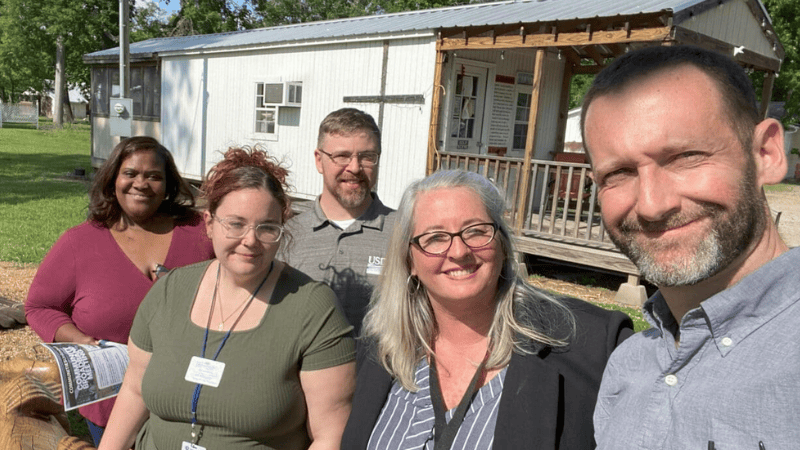
Communities Unlimited works alongside rural communities in persistent poverty to turn approved plans into real connections. If your community wants to understand where it stands in the BEAD build, get local providers and co-ops to the table, or build the digital skills and adoption piece, connect with CU’s Broadband team

