

Alabama BEAD Broadband: What It Means for Rural Communities
Updated October 21, 2026. In Alabama the awards are county-specific, so the first step for any town is simple: find out who holds your area.
Alabama BEAD broadband at a glance
- Approved: NTIA approved Alabama’s BEAD final proposal, announced by Gov. Ivey on March 23, 2026.
- Awards: Nearly $460 million for 63 projects reaching about 92,000 unserved locations.
- Technology: By project count, about 71 percent fiber, 24 percent low earth orbit satellite and 5 percent hybrid fiber-coax.
- Savings: ADECA says it is saving more than $800 million of the original $1.4 billion allocation.
Where Alabama’s BEAD plan stands
Alabama’s approved plan averages under $5,000 per location, and ADECA says it is holding back more than $800 million of the original allocation. Contracts for the 63 projects were still being developed when the awards were announced.
The state’s release lists awardees by county. Here is where each is building:
| Provider | Counties |
|---|---|
| Comcast | Calhoun, Colbert, Etowah, Houston, Lauderdale, Mobile, St. Clair, Tuscaloosa |
| AT&T | Autauga, Bibb, Clarke, Cullman, Dallas, Jefferson, Lee, Montgomery, Morgan, Russell, Shelby, Talladega, Walker |
| SP Broadband | Conecuh, Escambia, Monroe |
| Premier Broadband | Chilton, Cleburne, Lawrence |
| Zitel | Baldwin, Randolph |
| mStreet Fiber Alabama | Greene, Hale, Marengo, Perry, Sumter |
| Windstream Alabama | Barbour, Coosa, Elmore, Macon |
| Spectrum Southeast | Blount, Cherokee, Dale |
| Brightspeed | Butler, Coffee, Crenshaw, Geneva, Henry, Pickens |
| Millry Telephone | Washington |
| Farmers Telecommunications | DeKalb, Marshall |
| Ardmore Telephone | Lowndes |
| Point Broadband | Clay |
| SpaceX (satellite) | Bullock, Chambers, Choctaw, Covington, Jackson, Pike, Tallapoosa, Wilcox, Winston, plus statewide |
| Amazon (satellite) | Statewide, 14,728 locations |
Satellite awards are a meaningful part of the plan: Amazon alone is slated for 14,728 locations. Satellite works differently from fiber on price, equipment and capacity, so residents in those areas will want to know what they are signing up for.
What to watch as construction starts
- Contract signing and when construction starts in your county.
- Which technology is planned for your address, especially in satellite-served areas.
- Counties with several awardees, where service areas can overlap or leave gaps between providers.
- Buried fiber and buried water lines. Ask whether local water and sewer lines are mapped well enough to be marked before crews dig.
BEAD stands for Broadband Equity, Access, and Deployment. It is the federal program that sends billions of dollars to states to connect homes and businesses without reliable internet. For the picture across all seven states we work in, read our guide on what the move from plans to construction means for your town. Official page: Alabama broadband office.
What you can do now
Find out whether your address is in a funded project area, and which provider holds it. Ask what service will cost and what equipment you will need. Fiber in the ground only matters if a household can afford it and feels confident using it.
Faster service changes what a rural business can do: take online orders, run card readers reliably, sell outside the county, use cloud tools. Start thinking now about what you would change with a dependable connection. Our Entrepreneurship team works alongside rural entrepreneurs on exactly that kind of next step.
Most BEAD fiber is buried, and crews dig in the same roads and rights-of-way where your pipes already sit. An 811 locate request marks the lines someone has on record, and it’s not uncommon for a small system’s maps to be outdated, incomplete or on paper. A line that isn’t on the map can’t be marked, and a cut line can mean an outage, a boil-water notice and an emergency repair bill.
For a more successful rollout, we’re advocating that communities map their water and sewer lines in GIS first, then build. Accurate maps give locators and the provider something reliable to work from. Our rural water and wastewater team works alongside small systems on exactly this, so reach out before construction starts in your area.
Get in touch with ADECA’s broadband office and the provider building in your area. Local permitting, pole access and right-of-way are where rural builds most often slow down, and local leaders can keep them moving. Ask the provider for its construction schedule and share it with your water, sewer and road crews, and ask whether your utilities’ lines are mapped well enough to be marked before anyone digs. A community that has already mapped its gaps and its buried lines, and planned for digital skills, is better placed to use what gets built.
How Communities Unlimited works alongside Alabama communities
Communities Unlimited does not sell internet service. Our broadband program works alongside rural and tribal communities in seven states on broadband planning and mapping, digital literacy training for residents, and connections to the funding and providers that bring new access. If your community in Alabama is preparing for BEAD construction, or wants to be ready for what comes after it, get in touch.
Alabama BEAD broadband: common questions
Nearly $460 million for 63 projects, announced by Gov. Kay Ivey on March 23, 2026, reaching about 92,000 unserved locations.
Awards cover dozens of counties. Comcast, AT&T, SP Broadband, Premier Broadband, Zitel, mStreet and others hold wired projects; the county table on this page shows each.
Some of it. By project count about 24 percent of the plan is low earth orbit satellite, including awards to Amazon and SpaceX.
ADECA was developing contracts for the 63 projects when awards were announced. Check ADECA’s broadband office for current schedules.
It can. Most BEAD fiber is buried, and crews dig in the same corridors as water and sewer lines. Lines that are not accurately mapped cannot be marked before digging, so a strike is more likely. Mapping a system’s lines in GIS before construction reduces that risk.
Communities Unlimited’s Broadband team works alongside rural communities in Alabama on exactly this: finding out which provider holds your area, mapping coverage gaps and buried water and sewer lines, and planning digital skills so residents can use the service once it arrives. We do not sell internet service. Visit our broadband page to meet the team and get in touch.
Sources
- Gov. Ivey: Final BEAD proposal approved, $460 million awarded
- Alabama broadband office
- Broadband Breakfast: BEAD projects likely to generate millions of 811 tickets
Figures come from the sources above as of October 21, 2026 and may change as states finalize contracts. Check your state broadband office for the latest.
Get connected with CU's Broadband team
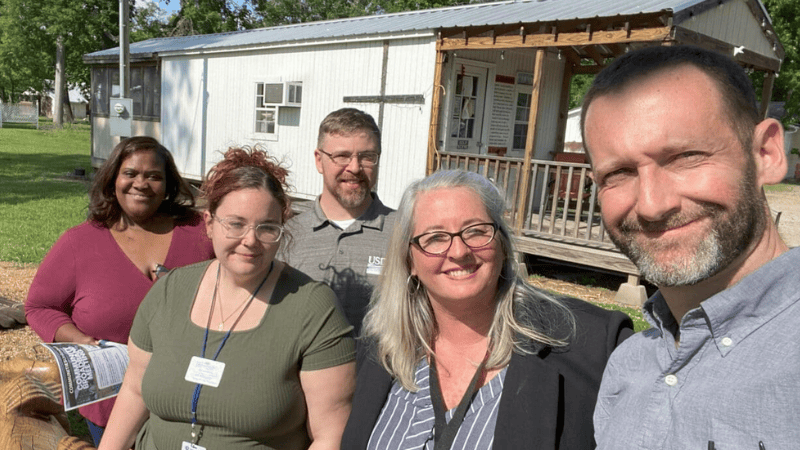
Communities Unlimited works alongside rural communities in persistent poverty to turn approved plans into real connections. If your community in Alabama wants to understand where it stands in the BEAD build, map its water and sewer lines before crews dig, or build the digital skills and adoption piece, connect with CU’s Broadband team.

