


Tunica County, Mississippi Looks Toward New Economic Opportunities
City
Tunica
State
County
Tunica
District
MS-02
Funding
Department
Outcome
Located along the Mississippi River in the Delta, Tunica County is looking toward its next chapter. Known for its casino industry, the county is working to broaden its economic base, make better use of its community assets and create new opportunities for residents.
For Dr. Billy Willis, the future of Tunica County is about continuing to build on what makes the community a good place to live.
Since arriving in the county in 1994, Willis has made it a goal to see Tunica improve, regardless of the position he holds. As County Administrator, he works with local leaders and community partners to guide Tunica through another period of change.

A County Built on Gaming Looks Beyond It
“Tunica has always been a great place to live,” Willis said. “Since coming to Tunica County in 1994, it has been my desire to make the county better in whatever role or capacity I serve.”
The county has experienced significant changes over the past several decades. From the 1970s through the early 1990s, Tunica went through several economic transitions before the arrival of the gaming industry brought a new source of revenue and tourism.
At its height, Tunica ranked as high as third among gaming destinations in the United States, behind Las Vegas and Atlantic City, with a large number of casinos. The industry brought resources for improvements to roads, bridges, housing and other public infrastructure.
But the gaming landscape has changed. Competition from casinos in other states, sports betting and lotteries has reduced Tunica’s share of the market, leaving county leaders to consider what comes next.

Looking Toward Industrial Growth and Tourism
“Now, we’re looking toward another transition, hopefully toward industrial growth in renewable energy, data centers and manufacturing,” Willis said. “These industries can provide more opportunities for residents to earn a quality living.”
The county is also looking to broaden its appeal to visitors. Rather than relying primarily on its reputation as a gaming destination, local leaders want to attract families and visitors interested in more than casinos.
“We’re trying to rebrand Tunica,” Willis said. “Rather than looking at ourselves strictly as a gaming destination, we want to become more of a resort and tourism destination. That means exploring different attractions, including water parks, amusement parks and other amenities that appeal to families, not just adults.”
The county already has several amenities, including the Tunica Arena and Expo Center, Tunica RiverPark and Museum, Tunica National Golf and Tennis Facility, an aquatic center and the Tunica Airport. The RiverPark also serves as a docking location for American Cruise Lines.
Making the most of these assets is part of the county’s effort to attract visitors and create new opportunities for residents.
Working on Community Priorities
The Community Sustainability Team at Communities Unlimited (CU) has worked alongside Tunica County on transportation, infrastructure and community development priorities as part of its broader community sustainability work. This work is supported through the Thriving Communities Program (TCP), a federal initiative administered by the U.S. Department of Transportation (USDOT).
Much of the partnership’s work has focused on transportation needs, including options for maintaining road infrastructure around the casino district, pedestrian safety near local schools and infrastructure improvements at the port.
Amanda McBride, a Facilitator with CU’s Community Sustainability Team, said the work involves bringing local leaders and partners together to identify concerns and explore practical solutions.
Separately, Tunica County received a sub-award through the Safe Streets and Roads for All (SS4A) program, which supports transportation safety planning and improvements. The sub-award will support a countywide safety action plan and a study of transportation infrastructure around the casino district.
McBride said Tunica has several strengths to build on, including local leaders who remain committed to the community’s future.
“The community has lost quite a bit over the years, but it still has a strong core,” McBride said. “There are already so many great things here, and Dr. Willis genuinely cares about helping Tunica grow and prosper again.”
A Safer Route to School
One of the partnership’s more immediate priorities involves students at Rosa Fort High School, where crossing Highway 61 presents a safety concern.
The highway runs alongside the school and nearby residential areas. Many students who walk to school live directly across the highway. Although a traffic light provides a designated crossing point, some students attempt to cross closer to their homes rather than walk the additional distance to the intersection.
Kendrick Smith, Principal of Rosa Fort High School, said the situation requires continued attention from school administrators and local law enforcement.
“We try to stay on top of the situation,” Smith said. “It’s our number one priority. Before educating children, you want to make sure their safety comes first. We want students to return home the same way they arrived at school.”
A school resource officer is stationed near the traffic light, and sheriff’s deputies periodically monitor the area to encourage drivers to slow down and discourage students from crossing in unsafe locations. Smith said staffing limitations make it difficult to have additional officers present at all times.
A Changed Landscape Near the School
Henry Nickson Jr., Assistant Principal at Rosa Fort, has seen the area change throughout his life. A lifelong Tunica County resident and former student, he remembers when an open field provided a more direct route between the nearby community and the school.
Over time, the property was developed, businesses were built and a fence eliminated that access. Students now have to walk toward the intersection of Highway 61 and Prichard Road.
Nickson said he would like to see the county, school district, local business owners and planning officials explore ways to establish a safer, more direct route. One possibility would be a monitored access gate that allows students to enter and leave the school area safely.
He also emphasized the importance of visibility and additional safety measures for students attending evening games and extracurricular activities.
Walking the Route
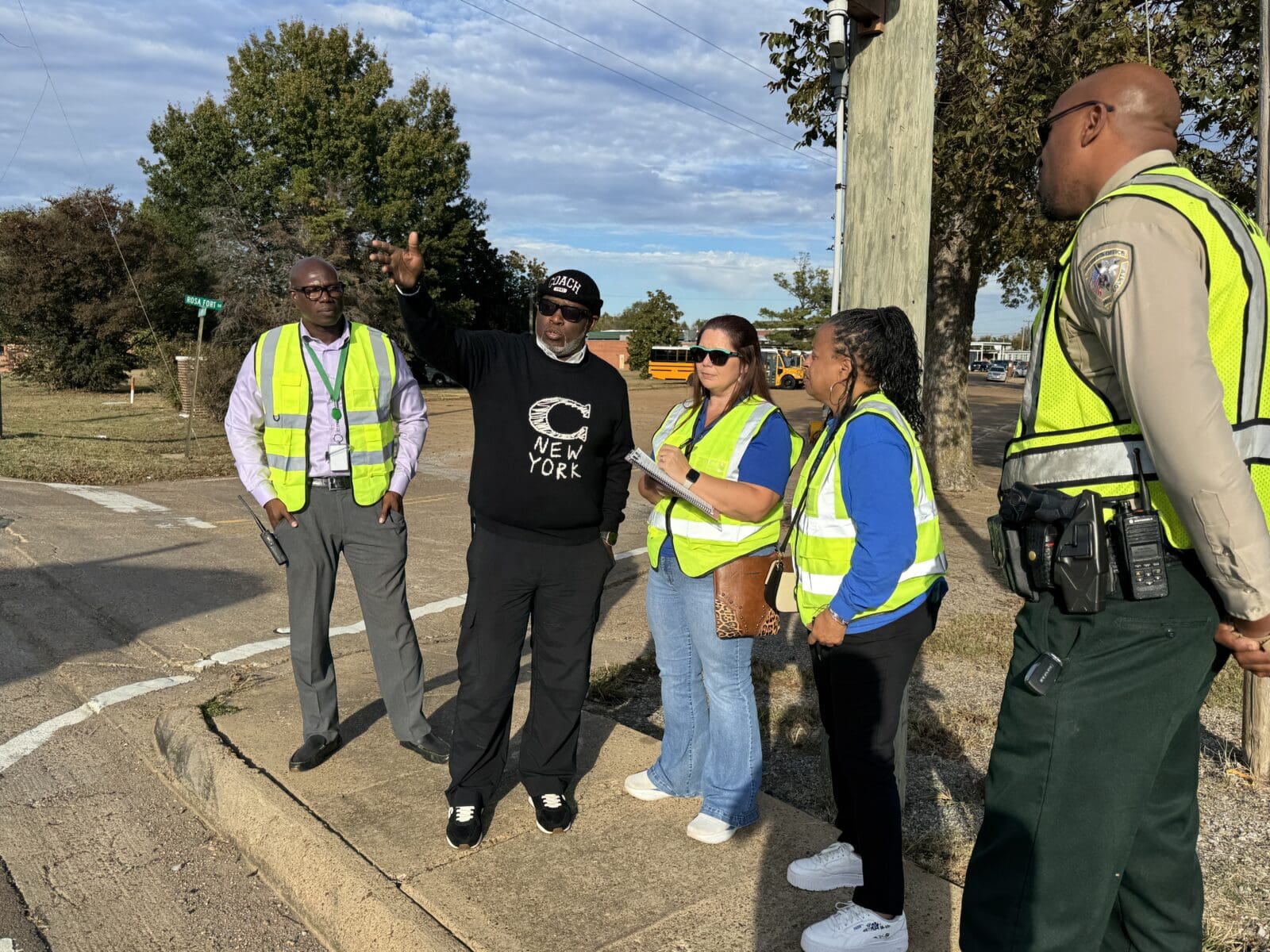
Brenda Williams, another CU Facilitator, also works with Tunica County alongside McBride. On Nov. 10, the two joined school leadership for a walk audit of the route students use to reach Rosa Fort High School.
A walk audit is an assessment of a street or neighborhood that examines how safe and accessible it is for people walking. Participants walk the route, observe traffic and pedestrian conditions, and identify potential safety concerns and improvements. The assessment gives local leaders and partners a better understanding of the challenges students face getting to and from school.
Looking Ahead
Tunica County’s next chapter will take time to build. Willis said progress depends on bringing together people who understand the county’s needs and share a vision for its future. While the county has made strides, continued planning and cooperation will be important to turn those ideas into action.
After more than three decades in Tunica County, Willis remains focused on seeing the community reach its potential.
“I want to see Tunica County become the best it can be,” he said.
The Bigger Picture
- Tunica County seeks industrial growth and tourism beyond its gaming industry
- Highway 61 crossing near Rosa Fort High School remains a student safety concern
- Federal Thriving Communities Program funds transportation and infrastructure planning in Tunica
- A walk audit helped local leaders assess safety risks on the school route

