


Help for small water systems is crucial.
In far West Texas, near the Chinati Mountains and the Rio Grande, the small community of Candelaria has been around for more than 100 years. Founded in the early 1900s, it once had a cotton gin. It briefly grew during World War I when the U.S. Army opened a nearby outpost.
Today, Candelaria, located in Presidio County, is home to a small group of families — including ranch workers, retirees, and longtime residents. Their families have lived there for generations.
What the community doesn’t have is easy access to basic infrastructure. Towns are far away, travel takes time, and resources are limited. Together, these challenges shape daily life and make safe, reliable drinking water hard to come by — a reality shared by many rural communities that rely on outside help to keep small water systems running.
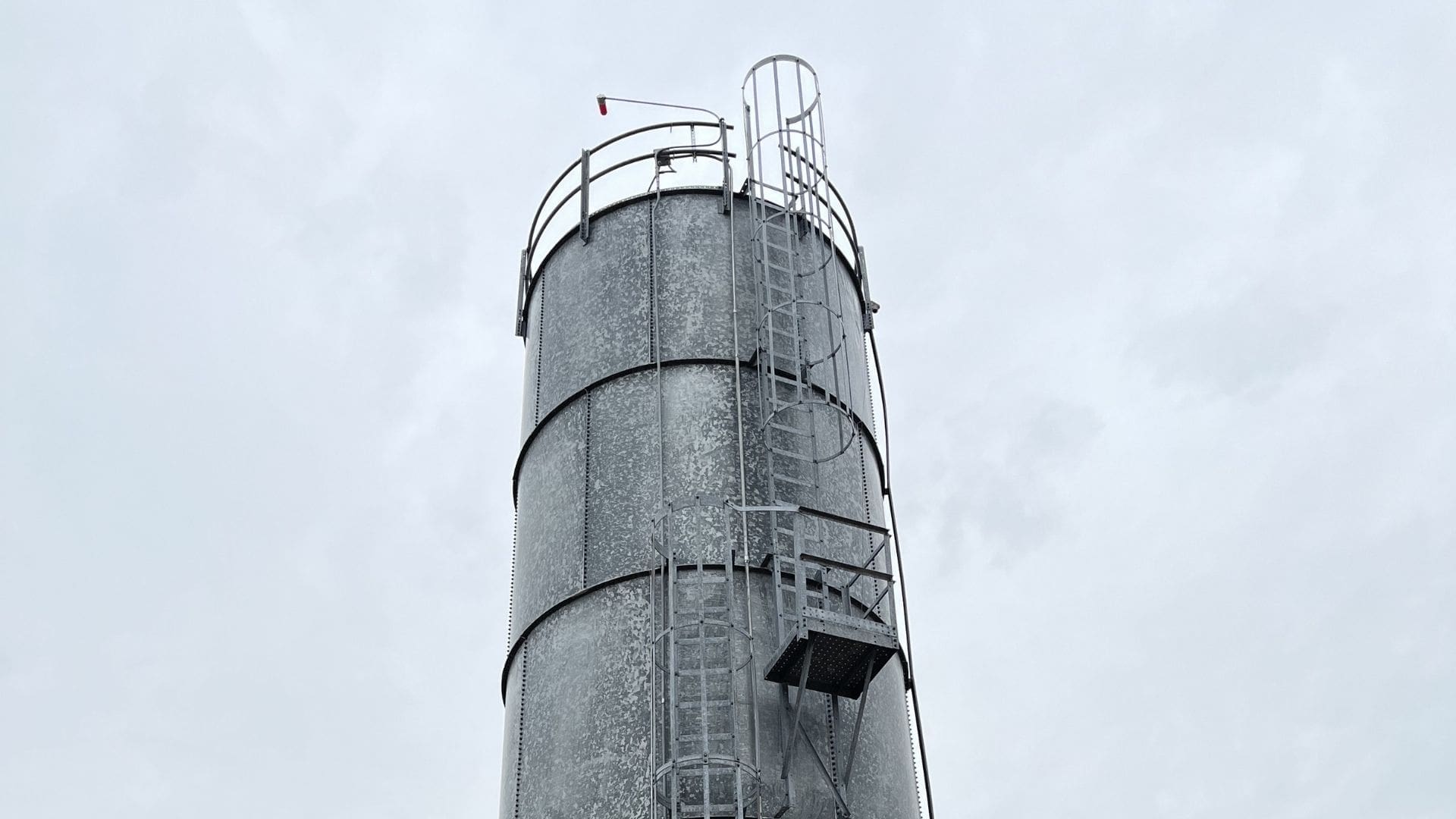
Candelaria Water Supply Corporation (WSC), a member-owned cooperative, serves about 46 active water connections. Like many very small water systems, it faces ongoing challenges, including old infrastructure and limited funding. There are also volunteer leadership and the difficulty of keeping licensed operators in such a remote area. Adding to these problems is a serious water quality issue — arsenic, a naturally occurring element that can seep into groundwater over time.
Early Warning Signs and a System at Risk
Concerns about Candelaria’s water go back decades. In the early 1990s, a local schoolteacher, Johnnie Chambers, raised concerns after noticing that many children did not have safe drinking water at home. In response, Presidio County helped secure grant funding for deeper wells. They also funded a water tank and a basic distribution system.
These improvements helped, but they did not solve the bigger problem. Over time, arsenic levels in the groundwater rose above federal safety standards.
By the mid-2010s, the water system was struggling in several ways. It went years without a licensed operator. Chlorination equipment stopped working properly. Routine water testing fell behind. Leadership also weakened, leaving just one board member to manage daily operations.
In 2016, the system received an official notice for exceeding arsenic limits, putting it at risk of enforcement and further instability.
Communities Unlimited Steps In
That same year, the Community Infrastructure Team at Communities Unlimited (CU) got involved at the request of the Texas Commission on Environmental Quality (TCEQ) and provided help to this small water system. CU joined Presidio County leaders and state and federal partners. They aimed to figure out how to support the system and prevent it from failing.
Working closely with local leaders and agencies, CU helped sort through the technical, management, and regulatory challenges facing the water system. Their involvement helped move the process forward by improving communication, bringing partners together, and setting the stage for long-term solutions.
Still, progress was not easy.
Years of Persistence, Setbacks, and Reengagement
Finding the right way to treat the arsenic proved more difficult than expected. Engineering plans stalled as partners reviewed different options, costs, and operating needs. Because Candelaria is so remote, it was hard to find engineers and contractors. Limited funding also made it difficult to move projects forward. And for a system serving fewer than 50 connections, traditional treatment options were often too expensive to maintain.
Through it all, CU stayed involved — stepping in whenever progress slowed. The team helped strengthen leadership and supported efforts to recruit and train operators. They worked closely with Presidio County, TCEQ, and the Texas Water Development Board (TWDB).
When projects stalled, CU helped restart conversations. When compliance issues came up, CU helped guide the system through the process.
In 2019, with CU’s support, Presidio County secured a $300,000 Drinking Water State Revolving Fund (DWSRF) grant from TWDB. This was to study arsenic treatment options and move engineering forward. Even then, progress was slow. Engineering firms backed out when costs were too high, and finding new partners took time. Each delay meant rebuilding momentum with a small group of committed local leaders.
During this period, CU’s role went beyond technical help. Building trust with residents, board members, county officials, and regulators required showing up again and again — staying in touch, keeping conversations going, and making sure the community was not left behind.
Rethinking the Solution
By late 2023, it became clear that the original approach — treating arsenic at the system level — was likely not viable. Engineering analysis showed that a centralized treatment plant would be extremely costly. It would require a complex disposal process for treated wastewater. For a system serving fewer than 50 connections, the long-term operational and financial burden simply did not make sense.
In October 2024, engineering partners, agency staff, and CU reached a consensus. A Point-of-Use (POU) arsenic treatment approach offered a more realistic path forward. Under a POU system, small treatment units are installed at individual service connections, where they filter arsenic out of the water as it enters each home. Treating the water at the tap — rather than at a centralized plant — allows systems like Candelaria to avoid costly facility upgrades. It also avoids complex operations and expensive waste disposal requirements.
The Hardest Part: Community Buy-In
While the technical case for POU treatment was strong, implementation introduced a new challenge: public acceptance.
To build understanding and trust, CU focused its efforts on community engagement and education. The team developed plain-language flyers explaining how POU systems work, why they were being proposed, and how they could provide safe, compliant drinking water at a lower cost than previous approaches. CU staff also organized meetings with residents, the Board President, and the Presidio County Commissioner. They discussed the revised treatment strategy and answered questions.
These conversations were not easy. For residents, the idea of installing treatment equipment at individual homes raised concerns about maintenance, responsibility, and change. Even with years of engagement and explanation, community buy-in has remained difficult. As of mid-2025, residents have not yet agreed to move forward with the POU approach.
At the same time, TCEQ has confirmed that arsenic levels remain above allowable limits, emphasizing the urgency of finding a solution.
Why Persistence Matters
CU has remained alongside Candelaria for nearly a decade — supporting governance, reengaging stalled engineering, coordinating agencies, and repeatedly working to move the project forward. Over the years, CU has helped “revive” the project more than once when momentum faded. Each time, the work required rebuilding alignment and restarting conversations that might otherwise have ended.
That persistence matters.
Without continued technical assistance and coordination, projects like Candelaria’s can easily collapse.
Candelaria WSC stands at a critical juncture. The community faces confirmed arsenic exceedances and must decide whether to proceed with the POU treatment approach that offers the most feasible path forward. The system will need to work with TCEQ to obtain approval of a pilot program to determine if the POU approach will sufficiently address the arsenic issue.
While challenges remain, the groundwork has been laid. Governance has stabilized, and engineering analysis has identified a viable path forward. Partnerships with Presidio County, TCEQ, and TWDB — along with ongoing technical assistance from organizations such as the Texas Section of the American Water Works Association’s (AWWA) Small Systems Division, CU, and Water Finance Exchange (WFX) — remain intact.
“Communities Unlimited is a valuable collaborator who is helping our team of technical assistance providers bring safe, compliant potable water to the Candelaria community in Presidio County, Texas. CU is always available to communicate with community leaders and keep our work moving forward.”
— Steven Walden, Chairman of the Small Systems Division with AWWA
Most importantly, the community has not been abandoned — and the path to safe, compliant water remains within reach.

