


Nestled deep in the Davy Crockett National Forest of East Texas, the Nigton-Wakefield Water Supply Corporation (WSC) in Trinity County has had the same mission since 2006: Keep water flowing to rural families who have no alternative. Nigton and Wakefield are small, unincorporated, and miles from any regional utility, so they formed a joint system when they cut the water lines open nearly two decades ago. The work hasn’t stopped since.
For years, the water system has faced challenges familiar to rural utilities: aging infrastructure, a small customer base, and a volunteer board trying to navigate complex regulations. Nigton-Wakefield serves roughly 140 customers each month, small enough that one malfunction or mismanaged invoice can threaten its survival.
Board President Kenneth Spencer has lived every chapter. He has served multiple terms and was present “the day we opened and turned the water on.” Asked about the system’s biggest hurdle, he didn’t hesitate.
“The biggest challenge has been getting the water to a standard the public would be satisfied with,” Spencer said. “The coloration of the water has always been the main issue.”
Over the years, the system cycled through engineers, contractors, and competing proposals to merge wells or overhaul major components. Some plans fell apart. Others came with price tags the board couldn’t absorb. Even basic operations, like meter reading, billing, and board governance became recurring obstacles.
“We’ve had people join the board and resign within two weeks, or some get on then turn around and leave,” Spencer said. “It makes it hard to keep a quorum.”
The Debt That Built the System
Nigton-Wakefield was originally built with the support of a U.S. Department of Agriculture (USDA) Rural Development loan in the 2000s. That single investment funded everything: surveying, engineering, pipeline installation, well drilling, and tank systems.
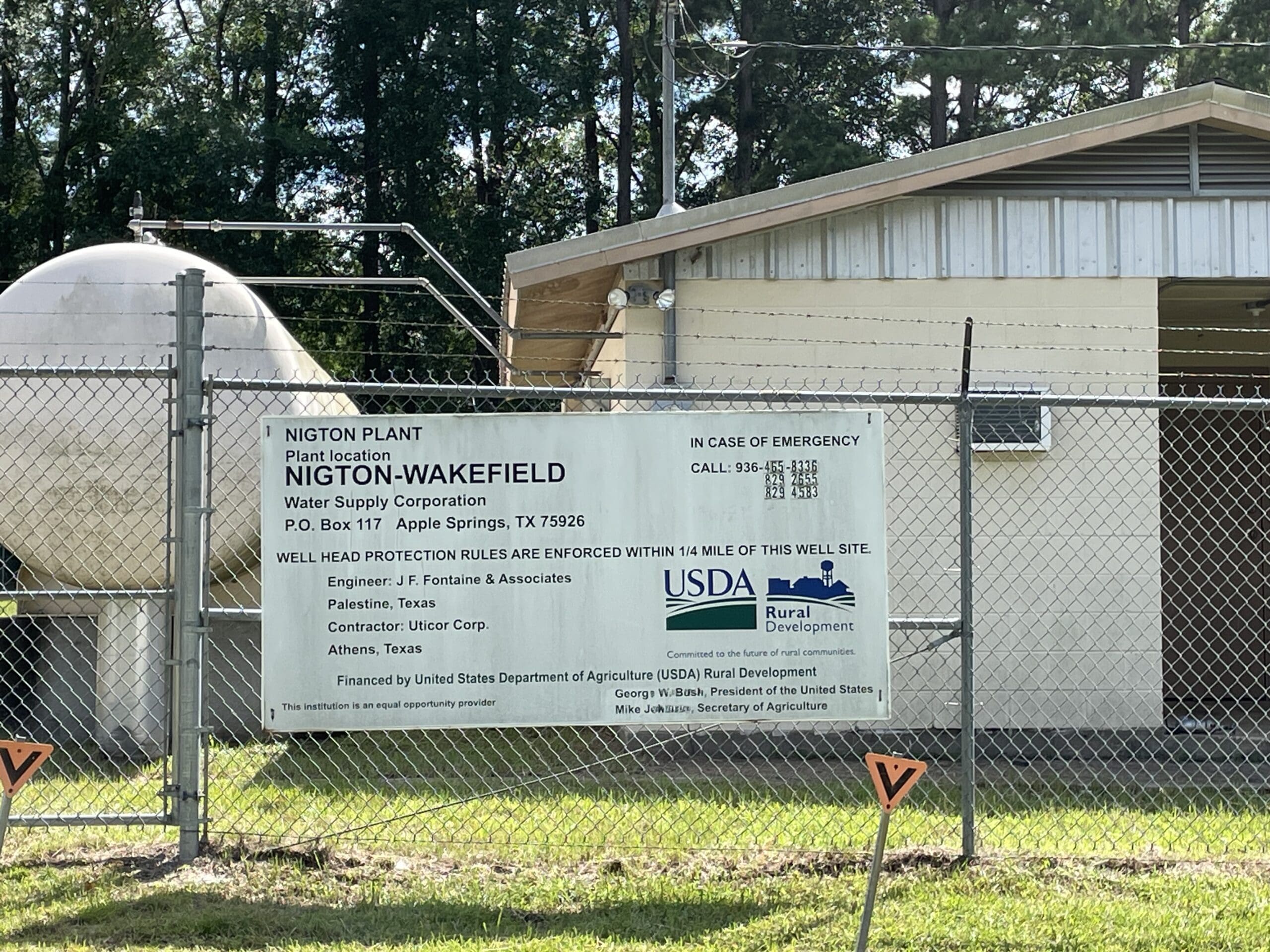
But like many rural utilities with aging infrastructure and a small rate base, the system eventually struggled to keep pace with repayment. Revenue fluctuated with leaks, equipment failures, and inconsistent meter data, making financial stability hard to maintain.
“At one point, we couldn’t make the monthly payment at all,” Spencer said.
Falling behind required additional attention from the borrower and USDA. The delinquent loan needed additional oversight. Federal law requires USDA to review all loans, including distressed loans, to protect taxpayer dollars, a process known as loan servicing. The goal is to collaborate with the borrower to determine a path forward.
To move forward, Nigton-Wakefield needed a workout agreement, a structured plan showing how payments could be met and operations supported. That process relies on documentation, verified customer counts, revenue projections, and regular reporting. At Nigton-Wakefield, many of those foundational elements simply didn’t exist.
Laying the Foundation
When USDA Lead Financial Specialist Brandi Burwell first began loan servicing efforts, she discovered several opportunities to resolve the delinquent loan. The immediate need, however, was to obtain critical documents, like current financial data and customer count, to develop the foundation of a potential workout agreement.
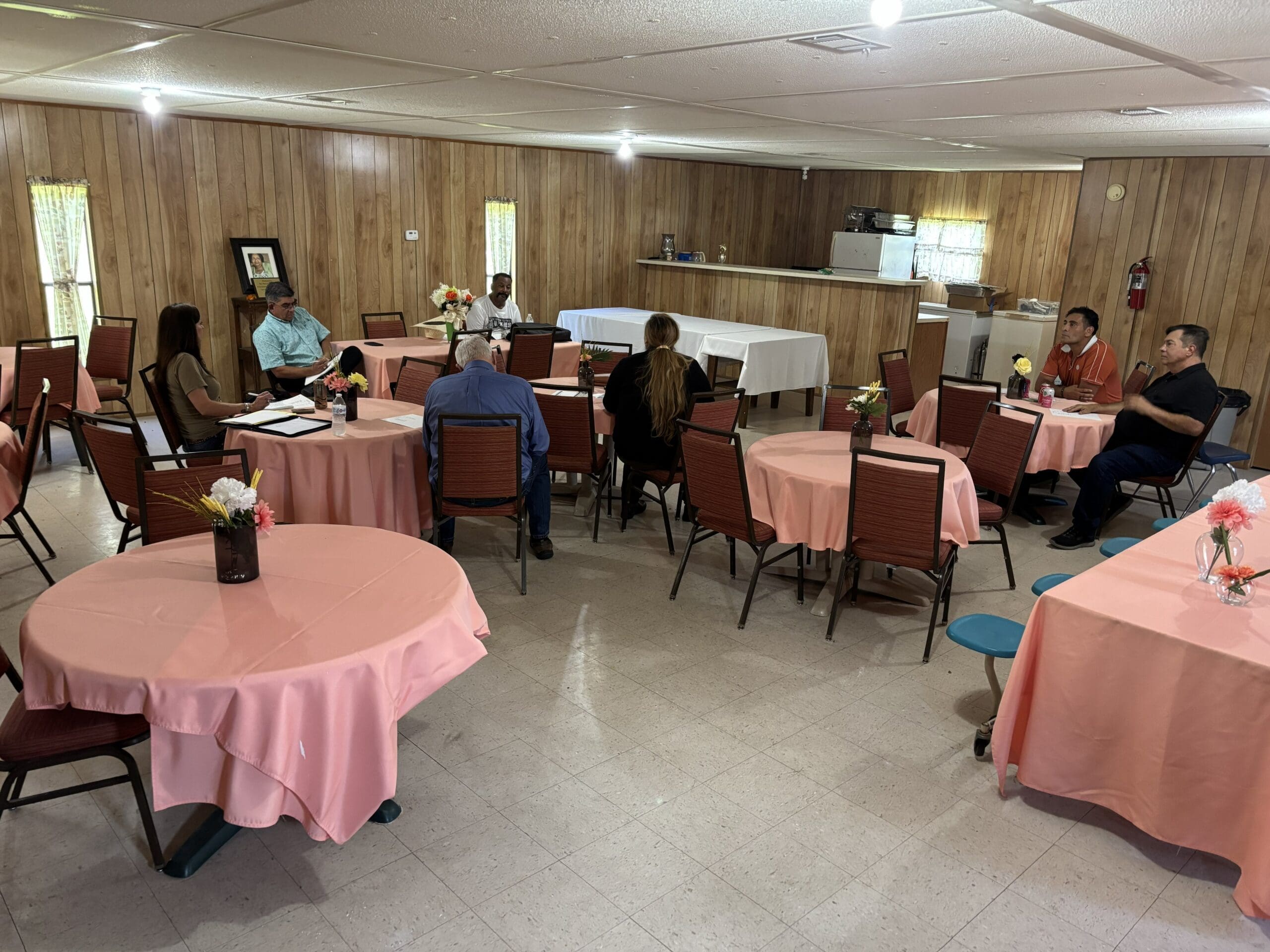
Communities Unlimited (CU) had supported Nigton-Wakefield off and on since 2019, but conditions shifted when East Texas Coordinator Jessica Hester and the Community Infrastructure Team at CU began working closely with the board in March 2025.
Hester stepped into a situation where invoices, meter books, and customer data were scattered. Then an unexpected challenge hit: a federal government shutdown. For 43 days — from October 1 until a funding bill reopened agencies on November 12 — USDA staff were furloughed.
During that pause, Hester continued working with the board. She collected paperwork, organized financials, and prepared the case file so that when USDA reopened, nothing was lost or delayed.
Brandi Burwell didn’t have to restart from scratch. Momentum hadn’t stopped — because Jessica hadn’t.
“Jessica went above and beyond,” Burwell said. “She met with them after business hours, chased down documents, and built relationships with people who were hesitant to talk to us.”
Trust Before Technology
Hester believes the progress started not with spreadsheets, but relationships.
“When I was brought onto the project, I knew nothing would move forward without trust,” she said. “If they didn’t believe someone was genuinely trying to help them, there wouldn’t be cooperation.”
Because she lives near the community, she could meet board members at odd hours — at the office, after work, late at night. Whatever it took to build rapport.
Instead of lengthy lists of requirements, she created a simple monthly “cheat sheet” outlining three things: What USDA would require, when it was due, and what documents needed preparing ahead of time
The impact was immediate. Paperwork began arriving on schedule. Meetings became productive. The board stopped avoiding conversations with federal staff.
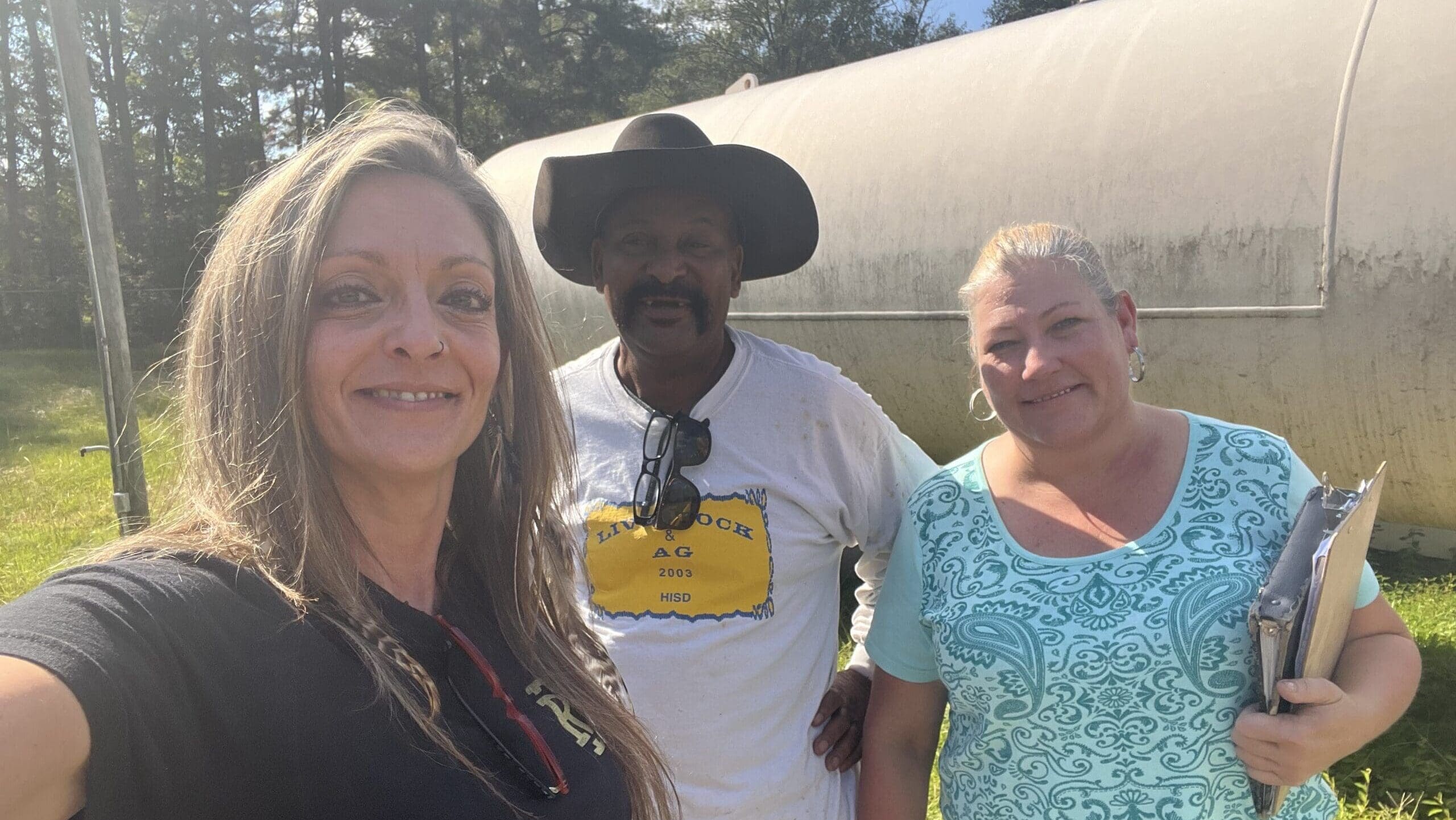
Burwell credits much of the turnaround to Hester’s on-the-ground presence.
“I’ve been with USDA for 18 years — I’ve seen a lot of systems. Jessica quickly understood key system challenges and the critical operational items requiring immediate attention. I asked her how she knew so much, and she said, ‘I used to operate these systems.’ That was amazing. She wasn’t just gathering paperwork or developing financial data and the rate study. She understood how the system physically runs. That is invaluable.”
— Brandi Burwell, USDA
The First Wins
As accountability improved, so did stability.
“Now we’re able to pay our monthly bills and still have two or three thousand dollars left over,” Spencer said.
A modest milestone, but for USDA, small gains compound.
“At USDA, we say all the time: Little wins become big wins,” Burwell said. “That’s what we’re seeing here.”
She also highlighted the broader ecosystem of support.
“USDA is boots on the ground. We do site visits. We handle loan servicing and collateral inspections during the years of loan repayment.”
A Path Forward — Not a Finish Line
Nigton-Wakefield is not a polished success story. The brown-water complaints persist. Repairs continue. And the USDA loan is still on the books.
But for the first time in years, there is forward movement.
“It’s a 360 from where we started. At the beginning, they were hesitant — especially around financial information. But once I listened, understood their situation, and guided them instead of pushing them, they leaned in.”

— Jessica Hester, Communities Unlimited
Both USDA and CU describe the progress as a collaboration forged through persistence and local ownership.
For families in Nigton and Wakefield, that partnership is the reason water still flows.
“I want Communities Unlimited to know we appreciate their work. We value the partnership.”
— Brandi Burwell, USDA
Kenneth Spencer, who has spent nearly 20 years on Nigton-Wakefield’s board, put it plainly: “It means a lot. They’ve helped keep the system alive.”
Then, one more note — not aimed at an agency, but at a person.
“Jessica does a lot of the legwork,” Spencer added. “She’s always a team player and she’s got a lot of connections. Since USDA and Jessica have been back on board, it’s been a good experience.”
In places like Nigton and Wakefield, “good” is survival — and survival is enough to keep going.

