


On a small piece of inherited land in Slaughter, a rural community in East Feliciana Parish in southeast Louisiana, Gigi’s Garden Groceries and Farm is cultivating more than herbs, vegetables, and fruit trees — it is growing access, resilience, and opportunity for local farmers and families.
Founded by Margaret Evans, Gigi’s Garden began as a personal endeavor.
“I kind of started it because I like the herbs,” Evans said. “I like to make wellness teas for my own personal use.”
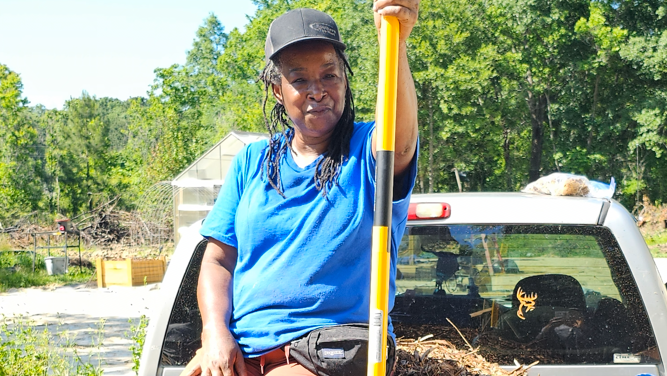
“When I was younger, my grandmother would call me to come help her work her garden — picking vegetables and learning how to till the green material of plants back into the soil,” she said.
She began with a small plot for peppermint, parsley, and other herbs. As the plants thrived, Evans decided to expand into additional produce.
“When I saw how well they would grow, I was like, ‘Oh, I’m going to do bigger,’” she said.
Through years of learning and experimentation, Gigi’s Garden grew from a small plot into an acre and a half dedicated to vegetables and herbs.
A Vision for Value-Added Agriculture
As Gigi’s Garden expanded, so did Evans’ vision. A nurse practitioner by trade, wellness has always been central to her work.
“We kind of came up with the idea for a wellness farm where we teach people how to grow things and nourish the spirit and the soul,” she said.
Along the way, Evans recognized a persistent challenge facing small and mid-sized producers in her region: limited access to special-purpose equipment needed to process agricultural products. Without local processing options, farmers often face unnecessary waste, spoilage, and missed market opportunities.
When a fellow farmer invited her to a presentation on a reimbursable grant through the Louisiana Resilient Food System Infrastructure (RFSI) program, Evans saw an opportunity.
“We went, and after about a month or two, she just backed off and said, ‘I’m not trying to do that,’” Evans said. “But I wrote the grant. I didn’t have grant-writing experience or anything,
“But I wrote the grant. I didn’t have grant-writing experience or anything, but I knew what we had. I knew what we wanted here at Gigi’s Garden — so I wrote the grant. And my proposal got accepted.”
The grant positioned Gigi’s Garden to invest in critical equipment, including a refrigerated reefer van, a commercial dehydrator, a freeze-dryer bundle, a juicer, and an upright freezer. These investments would allow the farm to transform raw produce into market-ready, value-added products while also serving as a shared processing resource for other local growers.
A Critical Moment
Despite having an approved, USDA-passed grant, Evans faced a major barrier: the RFSI grant was reimbursement-based, requiring upfront capital she did not have. At the same time, a serious accident forced her out of work, draining her savings and leaving traditional lenders unwilling to help.
That’s when a friend connected her to the Lending Team at Communities Unlimited (CU).
“My friend connected me with Candence Brooks from Communities Unlimited,” Evans said.
“That was a beautiful connection. She made me feel seen. She made me feel heard. She made me feel valued.”
Through Brooks, an Economic Development Loan Officer, Evans found more than financing — she found trust, encouragement, and a partner willing to understand the full context of her business and life challenges. This loan from CU was supported by the Louisiana Small Scale Agriculture Coalition (LSSAC) and the Sachs Family Foundation.
“She answered my questions,” Evans added. “She dealt with the insecurity I had kind of developed along the way from trying to get funding. I really was like, ‘Oh, well, here we go again.’ She brought some hope and light back into that situation where I was thinking, ‘This could really happen.’”
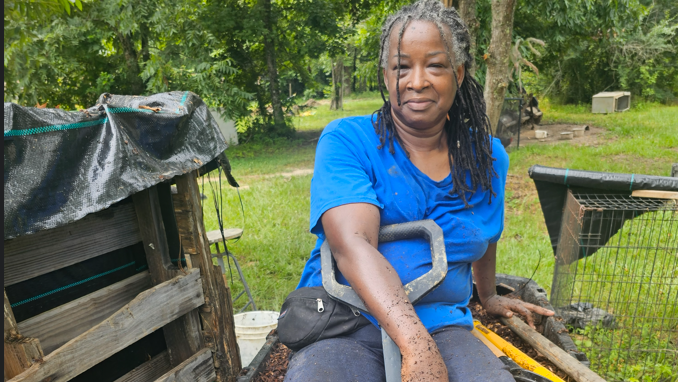
The CU Small Farm Lending program provides flexible capital for equipment purchases, contract fulfillment, working capital, and market expansion — addressing one of the biggest barriers small farmers face: access to financing that understands the realities of agriculture.
CU was able to step in at a critical moment — bridging the gap between a reimbursable federal grant and the upfront costs required to bring Gigi’s Garden’s processing vision to life.
Turning Capital into Community Impact
With support from CU, Gigi’s Garden is now moving forward with its processing facility — an investment that will benefit both the business and the broader local food system.
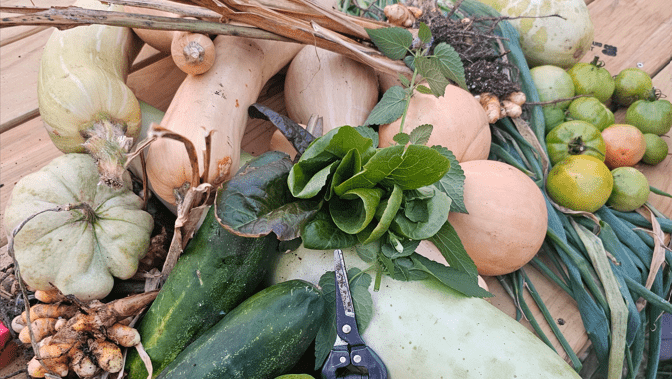
The new processing unit will allow Gigi’s Garden and neighboring growers to reduce food waste, preserve harvests, and create value-added products such as hibiscus juice, freeze-dried herbs and greens, dehydrated peas and squash, herbal teas, tomato sauces, fruit preserves, and pickled vegetables.
These products will expand the farm’s reach into regional farmers markets, retail outlets, online sales, food hubs, and institutional and school food service programs.
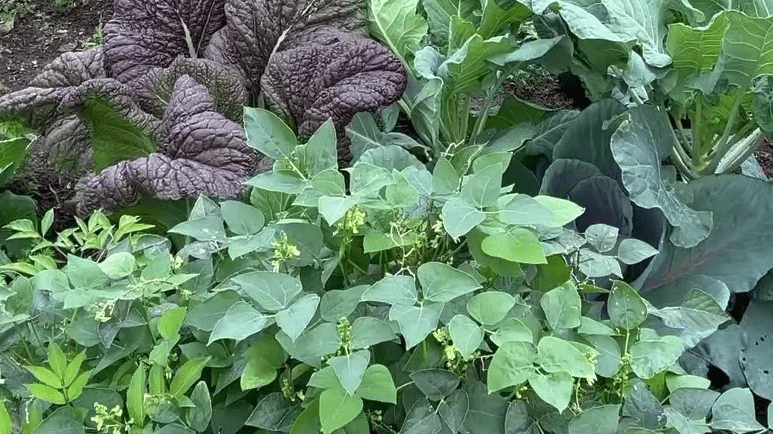
Together, these efforts will diversify the farm’s income through processing services, seasonal grocery boxes, wellness products, and on-farm experiences like tours, retreats, and workshops. Evans has already begun partnership conversations with community gardens, a local Christian academy, and faith-based organizations to expand access and education.
More Than a Loan
For Evans, CU’s support has had an impact far beyond the balance sheet.
“It feeds into my well-being as a person and allows us to feed into the well-being of the community,” she said.
“I feel safe. I feel like I have a safety net of individuals who want to see me succeed and grow. I know there are other programs I can access to help me continue to grow and be sustainable.”
With renewed momentum, Gigi’s Garden is emerging as a hub for wellness, food preservation, and community connection.
“I see the light,” Evans said. “Everything that I thought I couldn’t do is coming into view — that I can do more, and I can reach more, and I can help more people.”

