


For years, students at Jackson Steele Elementary School in White Hall, Alabama, located in Lowndes County, couldn’t use their school water fountains.
The school serves about 130 students and staff, from kindergarten through fifth grade, in Alabama’s Black Belt region — an area that has long faced infrastructure and water quality challenges.
According to Dr. Shana Ervin, the school’s principal, access to clean drinking water had been a persistent issue.
“Since I’ve been here, we’ve had issues with the water inside the building,” Ervin said. “Sometimes it comes out brown, and sometimes it hasn’t been very healthy to drink. Because of that, I unplugged the old fountains because I didn’t want the students drinking from them.”
To make sure students stayed hydrated, the school relied on donated bottled water, including support from the City of White Hall and Mayor Delmartre Bethel.
“Mayor Bethel was generous enough to donate bottled water, which helped,” Ervin said. “But it’s not something we could sustain long term.”
Now, thanks to a partnership between Communities Unlimited (CU) and the Agua4All program, students once again have access to safe, clean drinking water at school.
Agua4All is a national initiative of the Rural Community Assistance Partnership (RCAP) Network that helps schools and communities install water bottle filling stations and improve access to safe drinking water.
As one of RCAP’s regional partners serving the South, CU helps bring the program to rural communities, combining infrastructure support, technical assistance, and local partnerships to ensure students have reliable access to healthy drinking water.
The project began when Bria Hines, a CU Management Specialist working with communities across Alabama, learned that the organization had the opportunity to participate in the Agua4All program. Agua4All is funded through a grant from CoBank and provides schools with water filtration stations designed to improve access to safe drinking water.
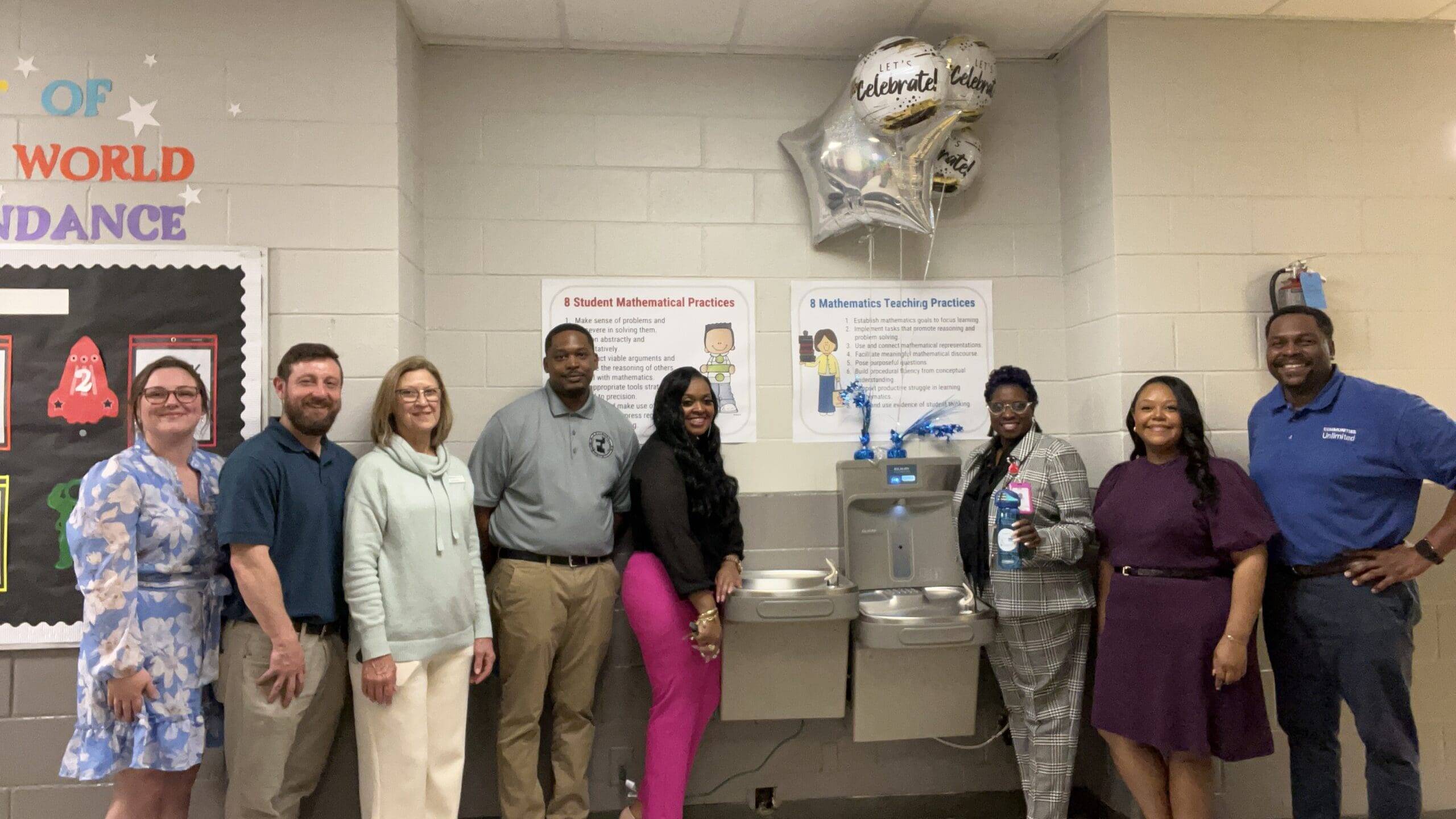
The project is a continuation of CU’s work in White Hall that strategically blends Community Infrastructure, Community Sustainability, Geographic Information Systems (GIS), and Entrepreneurship.
“The mayor had been talking with me about the community’s water and wastewater challenges, including the need for a filtration station at the local school,” Hines said.
When she learned filtration stations could be installed through the Agua4All program, Hines immediately reached out to local leaders.
“I contacted the mayor again, and he connected me with the school principal,” she said. “As soon as we explained the program, she immediately said yes.”
After meeting with school leaders and confirming their interest, CU coordinated the next steps. CU worked with the school district to order equipment and guide the installation process.
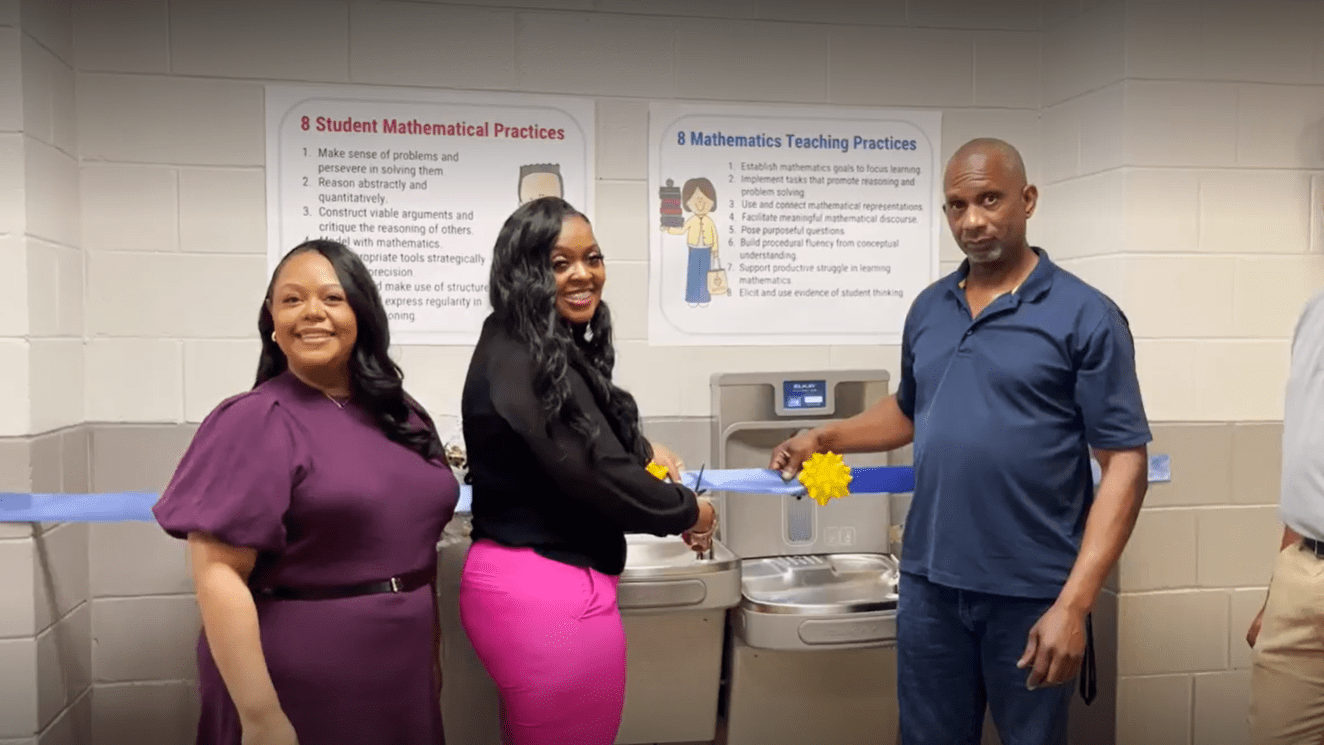
James McCall, a maintenance worker with the local school district who has served for 12 years, helped install the new stations. McCall credited CU for helping ensure everything worked smoothly.
The school agreed to maintain the stations going forward, and CU provided extra filters to support long-term use.
Originally, the project included one filtration station.
But the program ultimately delivered two, doubling the impact for students and staff.
“We were fortunate because we were able to secure two stations for the school,” Hines said.
“That meant even more students could access clean drinking water throughout the day.”
The new filtration stations are already being used throughout the school day — not just by students.
“My secretary has been using it all day,” Dr. Ervin said. “We even had a Valentine’s Ball recently, and we used the water for making punch and slushies.”
Students will also receive reusable water bottles, reducing the need for families or the school to purchase bottled water.
“We’re a very small school and our funds are limited,” Ervin said. “The students are always asking for water, so this will allow them to get water when they need it.”
The most powerful feedback came from the students themselves.
For many of them, this was the first time they could remember using a working water fountain at school.
Roman Shaw, an 11-year-old fifth grader, quickly noticed the improvement.
“It was good,” he said after trying the water. “It tasted better, and it was cold.”
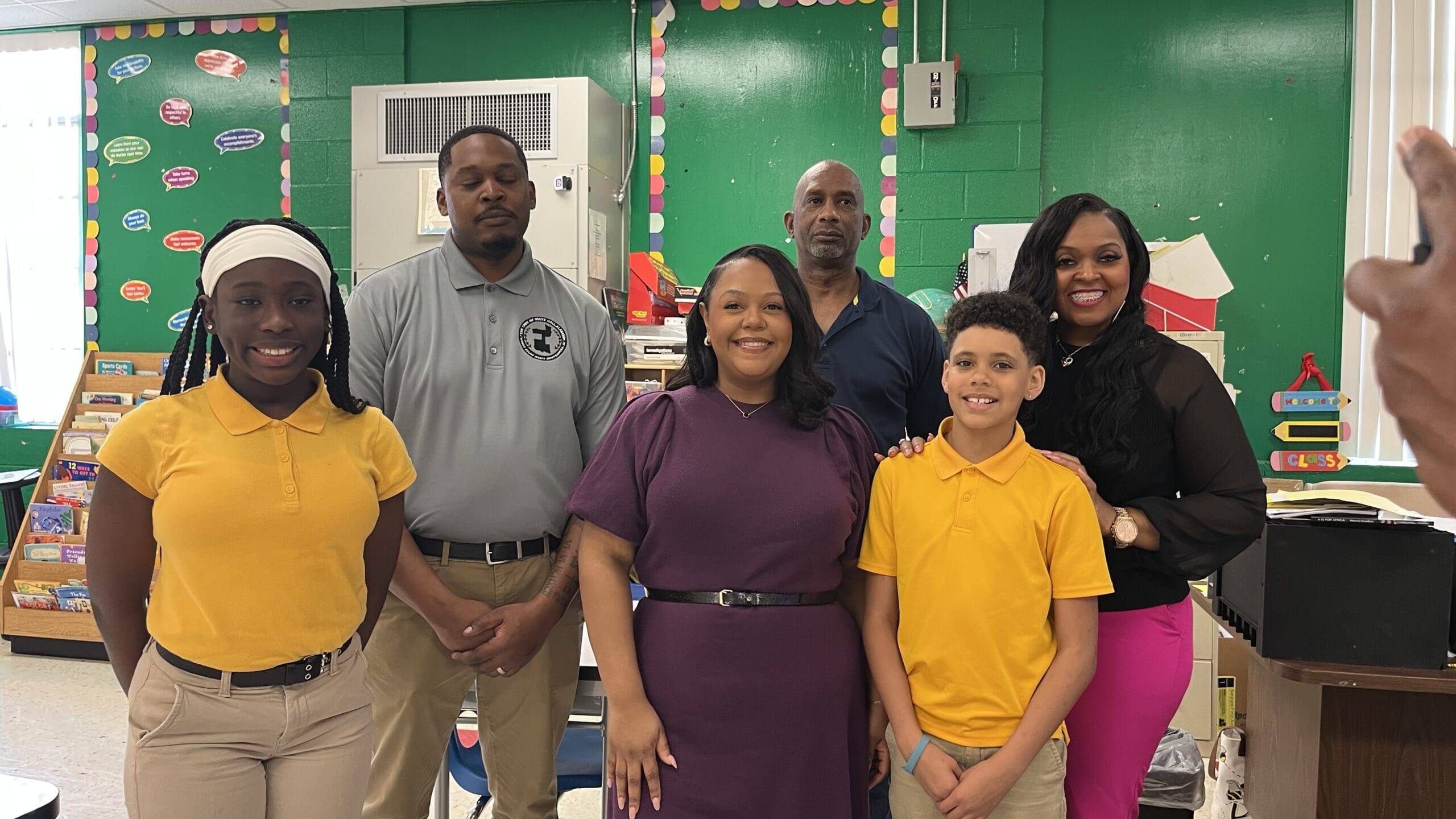
“When we come back from P.E., our coach sometimes runs out of bottled water,” he said. “This will help because we’ll be able to refill our bottles.”
Another fifth grader, Jelena Reeves, shared a similar reaction.
“It was good and healthy,” she said.
Local leaders say the project also helps address broader concerns about water access.
“One challenge we face is that our water system occasionally has issues,” Mayor Bethel said. “When the system breaks or we have a shutdown, whatever is in the system can flow through the pipes and eventually reach the school.”
The filtration stations provide an extra layer of protection for students.
“Our main concern is making sure residents and students have healthy drinking water,” he said.
“These stations help ensure the students have access to safe water.”
For CU, projects like this are about more than infrastructure — they’re about people.
“At the end of the day, it’s about the kids in these communities,” Hines said. “Seeing how excited they were reminded me why this work matters.”
From the youngest kindergartners to the fifth graders preparing for middle school, the return of safe drinking water at Jackson Steele Elementary represents the ability to stay healthy, hydrated, and ready to learn.

