


How Rural Code Enforcement Took Root in Dumas, Arkansas
Alvin Smith starts his mornings before city hall even opens. He drives the neighborhoods of Dumas, Arkansas, checking rooflines, watching for contractors, noting properties where the grass has crept past the city’s threshold. He always keeps a camera and a notepad handy. By the time other city employees clock in, he’s already working through his second block.
Smith is Dumas’s full-time Code Enforcement Officer. Two years ago, that position didn’t exist.
It took a plan to get there.

City
Dumas
State
County
Desha
District
AR-1
Funding
Department
Outcome
Seeing the Whole Town: GIS Mapping Reveals the Problem
When Dumas first started working with the Housing Team at Communities Unlimited (CU) and going through its COME HOME process, a community-centered approach to housing capacity that starts with a clear-eyed look at what a place needs, city and task force leaders got their first real picture of what they were dealing with. The CU Geographic Information System (GIS) mapping work that came out of that process in December 2024 documented vacant lots, flood-prone parcels, buildings with caved roofs, properties that had been quietly falling apart for years.
It also made something else visible: the city had no one consistently holding property owners accountable.
“After we got the GIS mapping done, we were able to see all of the different properties that truly could be classified as dilapidated or blighted,” said Linda Weatherford, who chairs the city’s Housing Task Force. “That helped us better understand what needed to be done.”
From Part-Time to a Full-Time Code Enforcement Officer
Code enforcement had drifted from a full-time role to a part-time one, then to whoever could absorb it. CU Director of Rural Housing Audra Butler and COME HOME Regional Manager Kapriskie Mack walked city leaders through the legal framework already at their disposal and made a recommendation to the City of Dumas: hire someone full-time. The city took it to council, worked it into the next budget cycle, and brought Smith on.
Smith started in the role part-time, mostly handling animal control. But once he got into the training, something clicked.
“I didn’t know how much authority there was to address things like overgrown properties, junk vehicles, and other issues that affect neighborhoods,” he said. “That’s when I really became interested in it.”
A Mechanic’s Instinct: Education Before Enforcement
His background shapes how he approaches the work now. As a mechanic, he’s always been the kind of person who stops when he sees a broken-down vehicle on the side of the road and asks what’s wrong before moving on. He brings that same instinct to residents who are behind on property maintenance.
“A lot of people, especially older residents, don’t always have the money to take care of certain issues,” he said. “Sometimes I go beyond what my job requires. I try to help people find solutions when I can.”
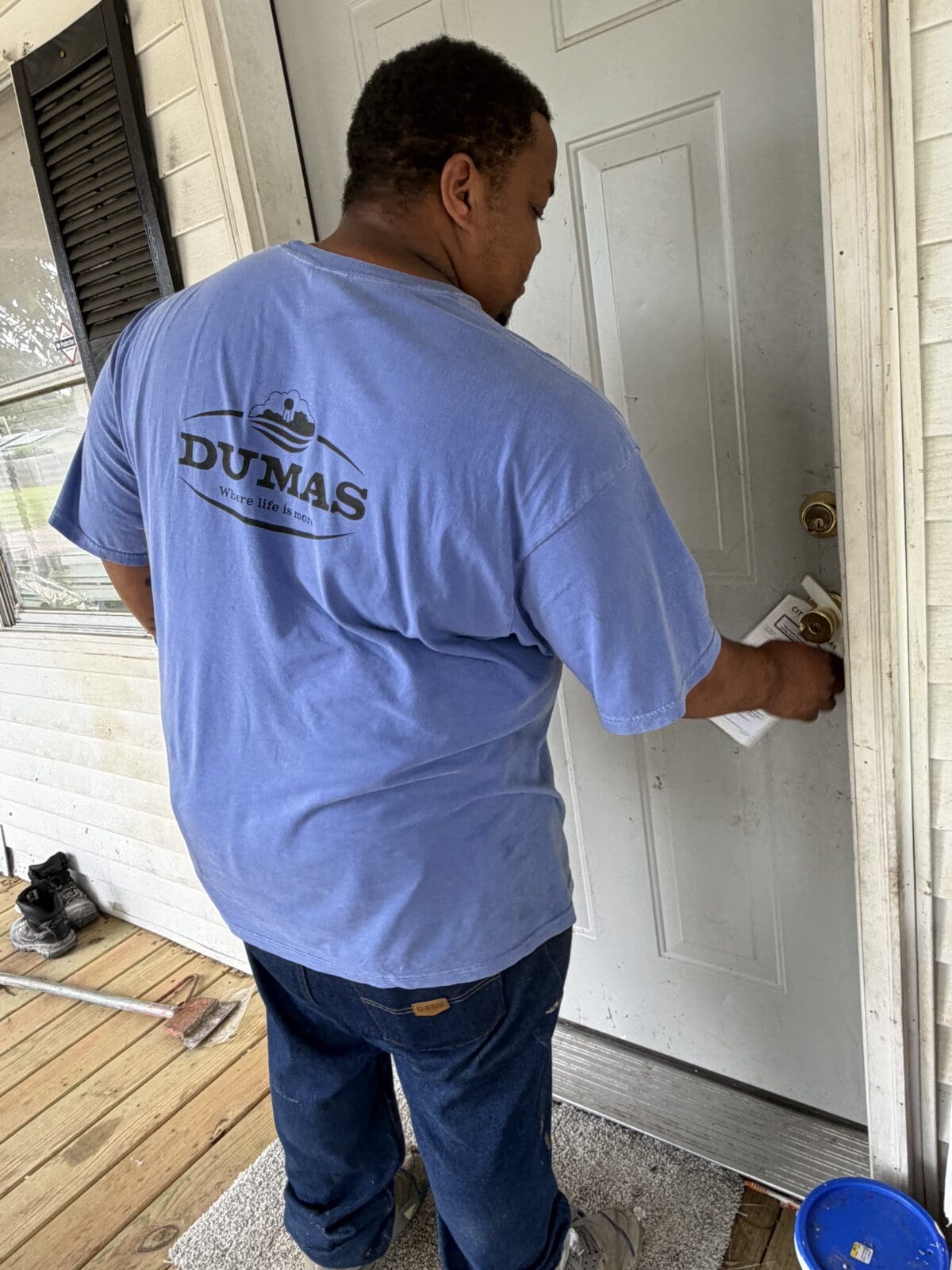
If someone can’t afford to cut their yard, he’ll connect them with a lawn care contact he knows. If a contractor is on a roof without a permit, he’ll walk them through what they need. Before any formal citation goes out, residents get a door knocker he prints himself, explaining the issue and what they can do about it. Common situations include overgrown grass, vehicles parked on lawns, and debris in yards. Smith describes the work less as enforcement and more as education.
“I want everybody to see that cleaning up a neighborhood can help everyone. If you improve the areas that need the most attention, the entire town benefits. Property values can improve, neighborhoods look better, and it gives people more reason to stay in the community.”
Turning Residents Into Reporters
He also opened up the city’s existing IQ Works reporting system to the public. Now a simple QR code lets any resident scan and submit a concern: an abandoned house with grass creeping up, a property where something doesn’t look right. Smith responds to each report, addresses the issue, and follows up with whoever submitted it.
“Citizens are using it a lot more,” Weatherford said. “Employees are using it more too. If they see an issue in a city building, they can enter it into the system. That gives Alvin the information and creates a paper trail.”
Planning That Keeps Paying Off: Housing Repairs and Community Connections
The planning work is still paying off beyond code enforcement. As part of Communities Unlimited’s rural housing work, the Housing Team used the property inventory to identify homeowners living in structures flagged as dilapidated and connect them with repair options: USDA grants, CU’s Healthy Homes program, and the Home Improvement Loan program, particularly for senior citizens and residents on fixed incomes.
Weatherford praised what the COME HOME process has done for the City of Dumas and the local Housing Task Force.
“Our knowledge as a task force has increased so much through our connections with Communities Unlimited,” she said. “The resources and the knowledge base have been incredibly valuable.”
For a closer look at how community-led housing plans are taking shape across the region, see how rural housing capacity is growing in similar communities.
The Bigger Picture
- GIS mapping of vacant, blighted, and flood-prone properties gave Dumas city leaders the evidence they needed to justify hiring a dedicated, full-time code enforcement officer.
- Dumas’s code enforcement model puts education first — door knockers, resident referrals, and permit walkthroughs before formal citations — keeping the approach community-centered.
- Opening the IQ Works QR reporting system to the public turned residents and city employees into active partners in neighborhood accountability.
- The same property inventory that drove code enforcement is now connecting low-income and senior homeowners with USDA grants, Healthy Homes, and CU’s Home Improvement Loan program.

