


When Board Chairman Fred Hammack looks back on Delaware County Rural Water District #12’s journey, one moment always stands out — the day he was told the system first had to become official before it could ever move forward.
“We really couldn’t get any funding because we weren’t officially a rural water district yet,” Hammack said. “I was told the first thing we needed to do was become one.”
Located in northeastern Oklahoma near Eucha, just outside the town of Jay, Delaware County Rural Water District #12 serves 438 customer connections, many of them in small lake and RV-park communities. The district was officially established in 2016, taking over water service from the Lakemont Shores property owners association — which first referred the system to the Community Infrastructure Team at Communities Unlimited (CU) in 2007.

Hammack joined the board that year, and from the beginning, former CU staffer George Tipton helped guide the district through the foundational work of becoming a formal rural water system — setting boundaries, working with county commissioners, and putting the administrative and financial pieces in place.
“They’ve just been good to work with over the years."
— Fred Hammack, Board Chaiman with Delaware County RWD #12
From Survival to Sustainability
After Tipton’s retirement, Karen Conrad — now CU’s Director of Community Infrastructure — became the district’s main point of contact. Her work helped the system stabilize its finances and prepare for its first major equipment investment.
“She helped us get our books straight, and that led to us getting our first loan (Paycheck Protection Program) for equipment — a backhoe,” Hammack said.
For Office Manager Treasure Dry, that early support made a lasting impact.
“Karen was a godsend to us. She really was,” Dry said. “She helped me set up our SAM.gov registration, guided us through grants and loans, and showed us how to get everything organized. She even came to the office and helped me set it all up.”
Over the years, CU’s support continued through new challenges — from Conrad to Central Regional Area Director Julie Hudgins, and most recently to Oklahoma State Coordinator Lucas Guinn, who has worked closely with the district on technical and financial planning.
Guinn’s work has included a full Technical, Managerial, and Financial (TMF) assessment, development of a cross-connection control plan, an emergency response plan, and a rate study to prepare the system for the financial responsibilities that come with major capital investment.
Now, after nearly 20 years of groundwork, Delaware County RWD #12 is on the verge of transforming its entire system.
Years in the Making
The district’s infrastructure plan is long overdue, according to Hammack.
“We’ve got two areas that are kind of like RV parks,” Hammack said. “We’re re-piping both of them — one is fully developed, and the other is mostly just lots right now.”
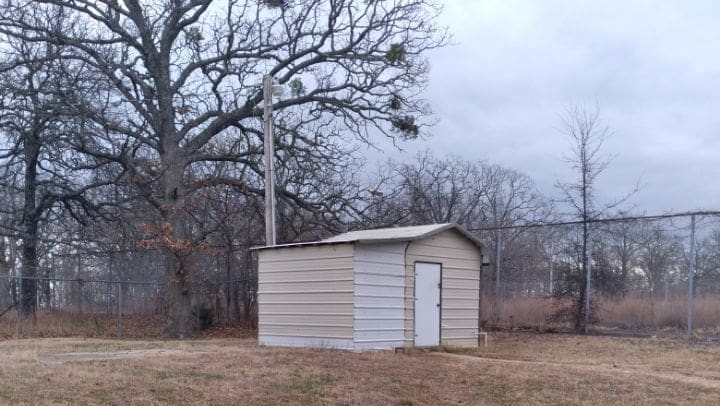
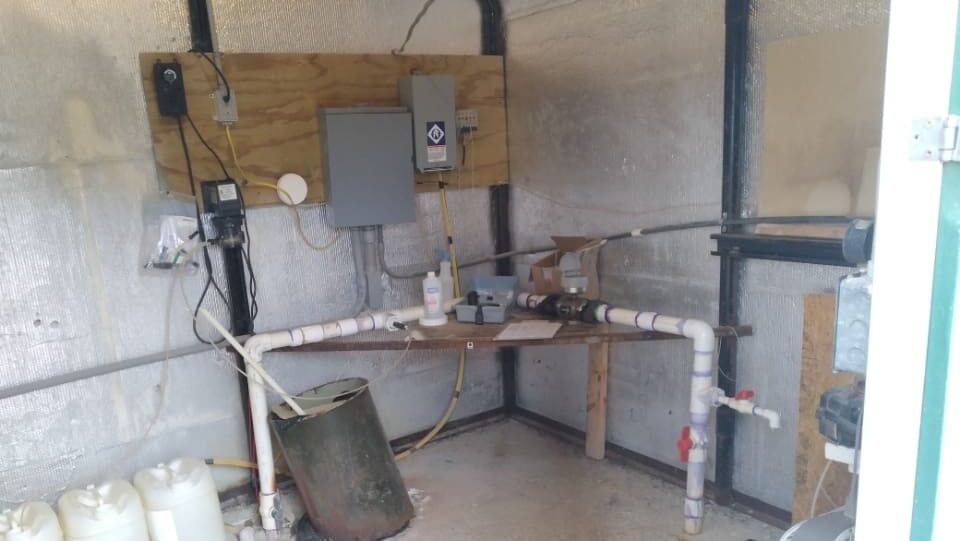
Beyond that, the project includes drilling a new well, building a new water tower, and installing a small treatment and aeration facility to improve water quality and system reliability.
For Dry, the need couldn’t be clearer.
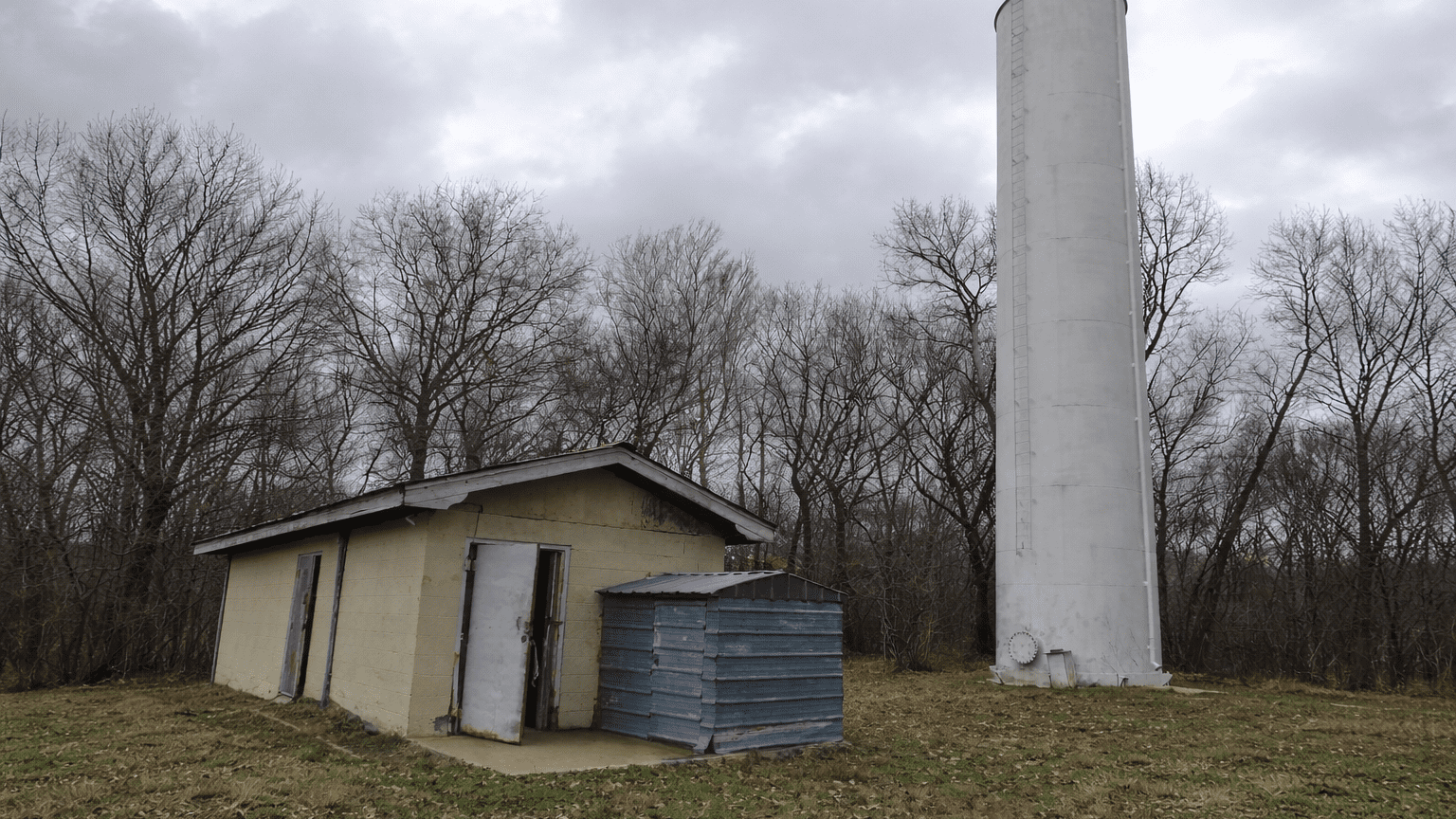
“Our towers are in bad shape — one of them even has holes where water just gushes out,” she said. “Getting new towers will be huge for us.”
Right now, the system loses about 60% of its water — largely because of aging pipes, shallow lines damaged by road work, and constant emergency repairs.
“We have to turn the water off two or three times a week to make repairs,” Dry said. “That’s hard on everyone.”
Once completed, the project will replace failing lines, add new meters, and upgrade storage — expected to cut water loss dramatically, improve pressure, and reduce the sulfur smell customers often notice.
“The water will smell better,” Dry said. “We have decent water, but it can be kind of sulfur-smelling.”

Making the Financing Puzzle Work
Pulling together the funding for a project of this scale required a mix of federal and state investment.
The district has secured major support through a USDA grant and loan, an Oklahoma State Revolving Fund (SRF) grant, and a Rural Infrastructure Grant (RIG).
But even with that package, there was still a critical gap — the upfront costs that make construction possible.
Engineering design. Legal work. Permitting. Easements. Land acquisition. These early-stage expenses don’t wait for construction dollars to arrive.
That’s where CU stepped in again.
Supported by the Robert Wood Johnson Foundation (RWJF), CU approved a Pre-Development Engineering (PDE) loan, with the Lending Team and Senior Economic Development Loan Officer Chris Ranniger facilitating the request. The loan covers the design, legal, and permitting work required to meet USDA’s Letter of Conditions (LOC) and keep the project on track.
“Honestly, before this, we couldn’t do much because we didn’t have the funding,” Dry said. “This loan lets us finally start our project. We’ve already made a payment to the engineer so everything can get rolling.”
The CU loan serves as the bridge between planning and construction — allowing the district to complete the technical and legal steps needed so the full project can move forward.
More Than Pipes and Towers
Dry sees these upgrades not just as a system trying to rebuild, but as the result of years of work with CU.
“I don’t think we could have done this without CU — you all have been magnificent and helped us every step of the way.”
—Treasure Dry, Office Manager with Delaware County RWD #12
When construction begins next year, Delaware County Rural Water District #12 will finally turn the page on decades of patchwork fixes and emergency repairs — replacing them with a system built to last.
For the small northeastern Oklahoma community it serves, the changes will be felt in everyday ways: stronger pressure, fewer shutdowns, cleaner-smelling water, and a system that can finally keep up with its customers’ needs.
For CU, it’s another example of what long-term partnership looks like — not just solving problems in the moment but walking alongside a rural community for nearly two decades until the pieces finally come together.

