


In many rural communities, progress doesn’t stall because local leaders lack ideas. It stalls because small county and city offices are stretched thin — and when a problem arises, they often don’t have a clear starting point or the time to track down the right help.
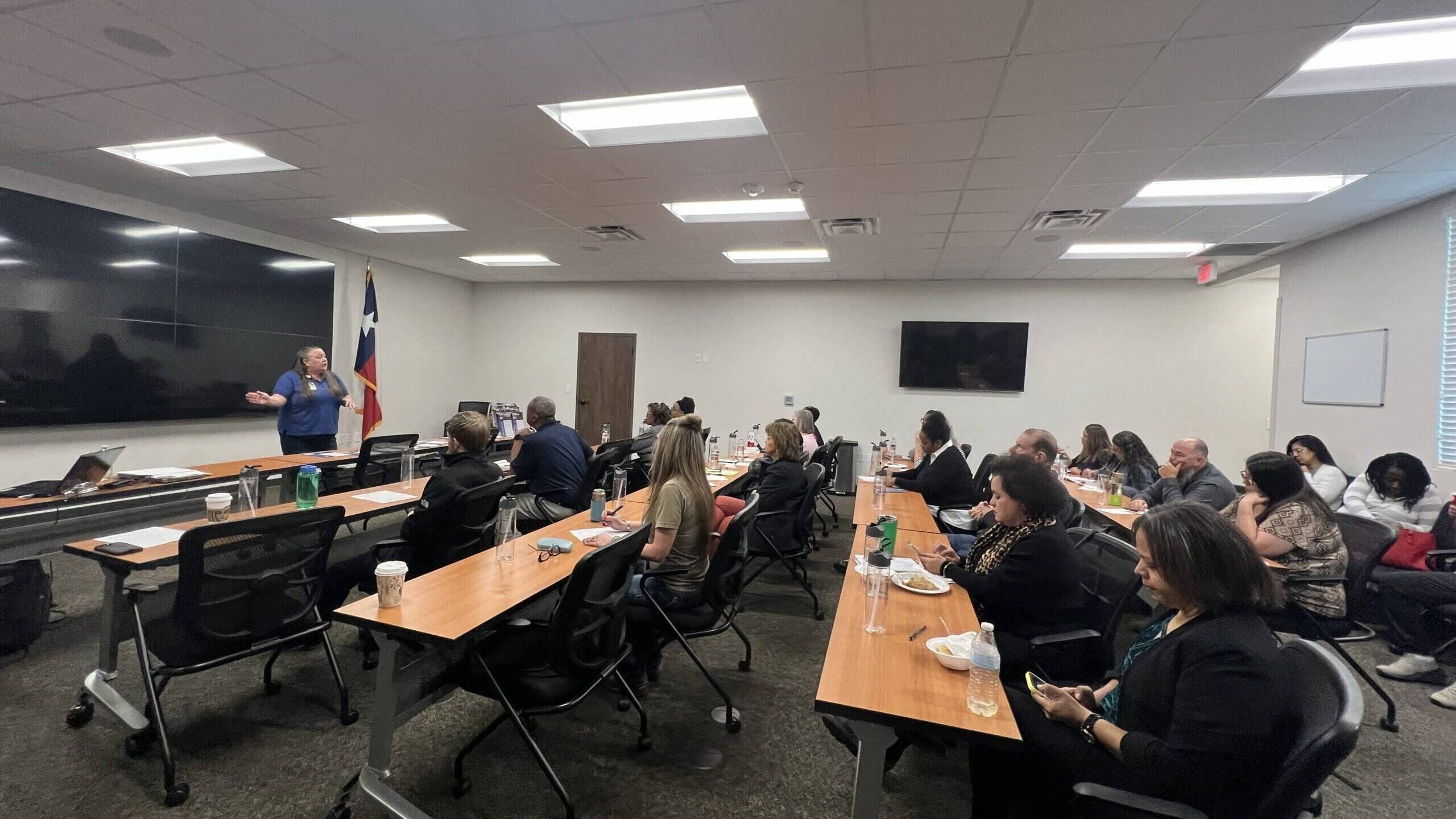
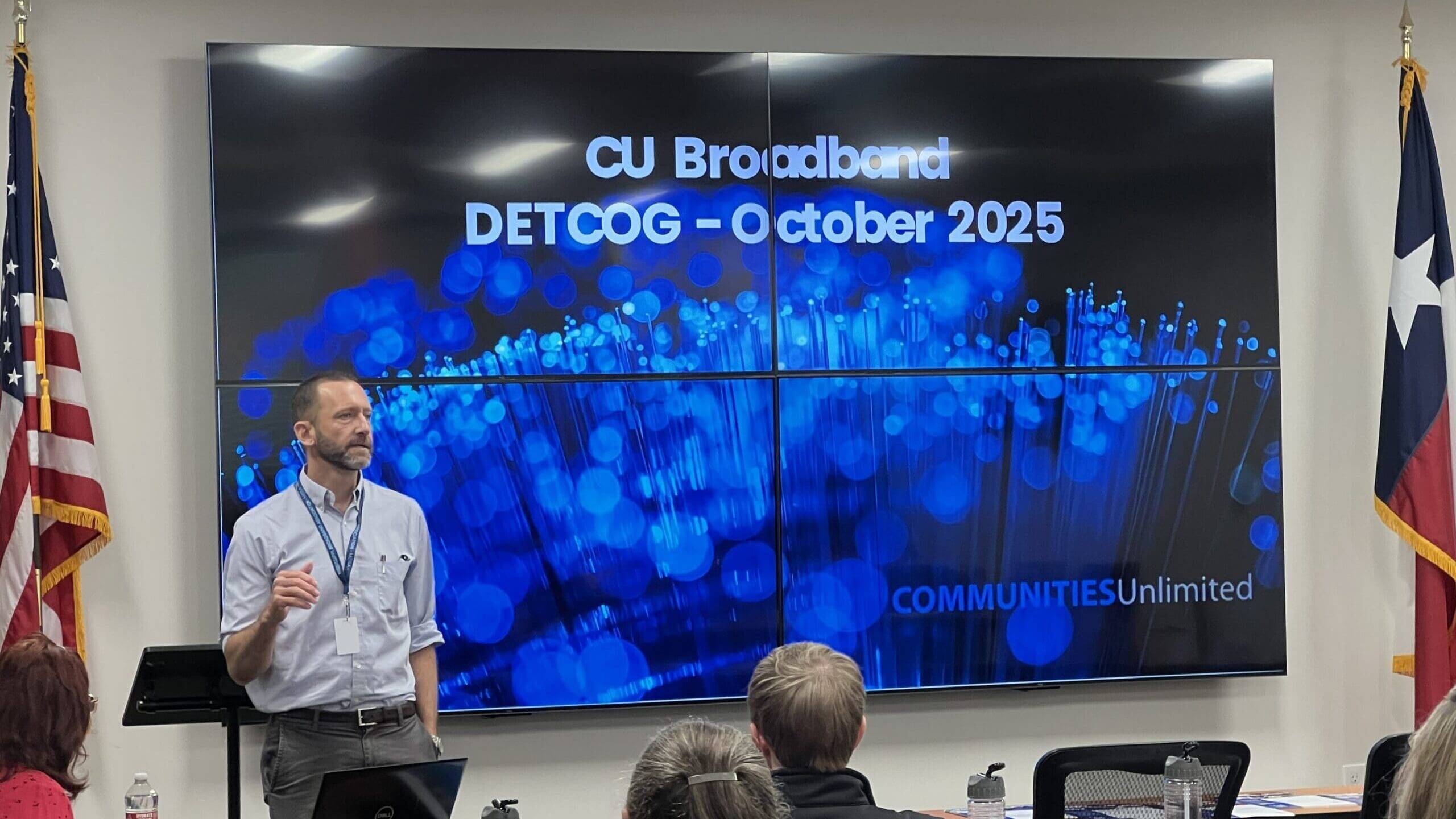
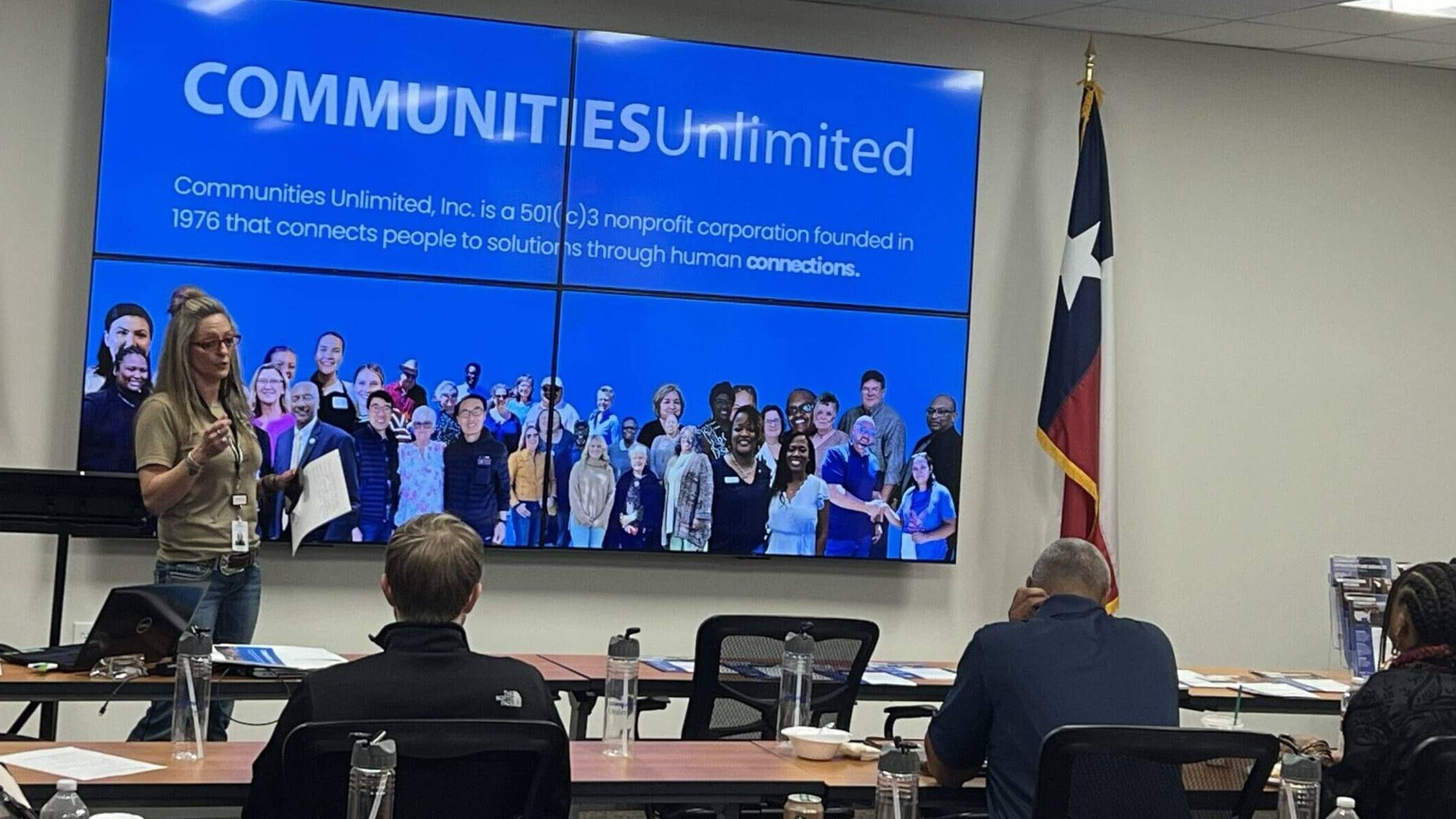
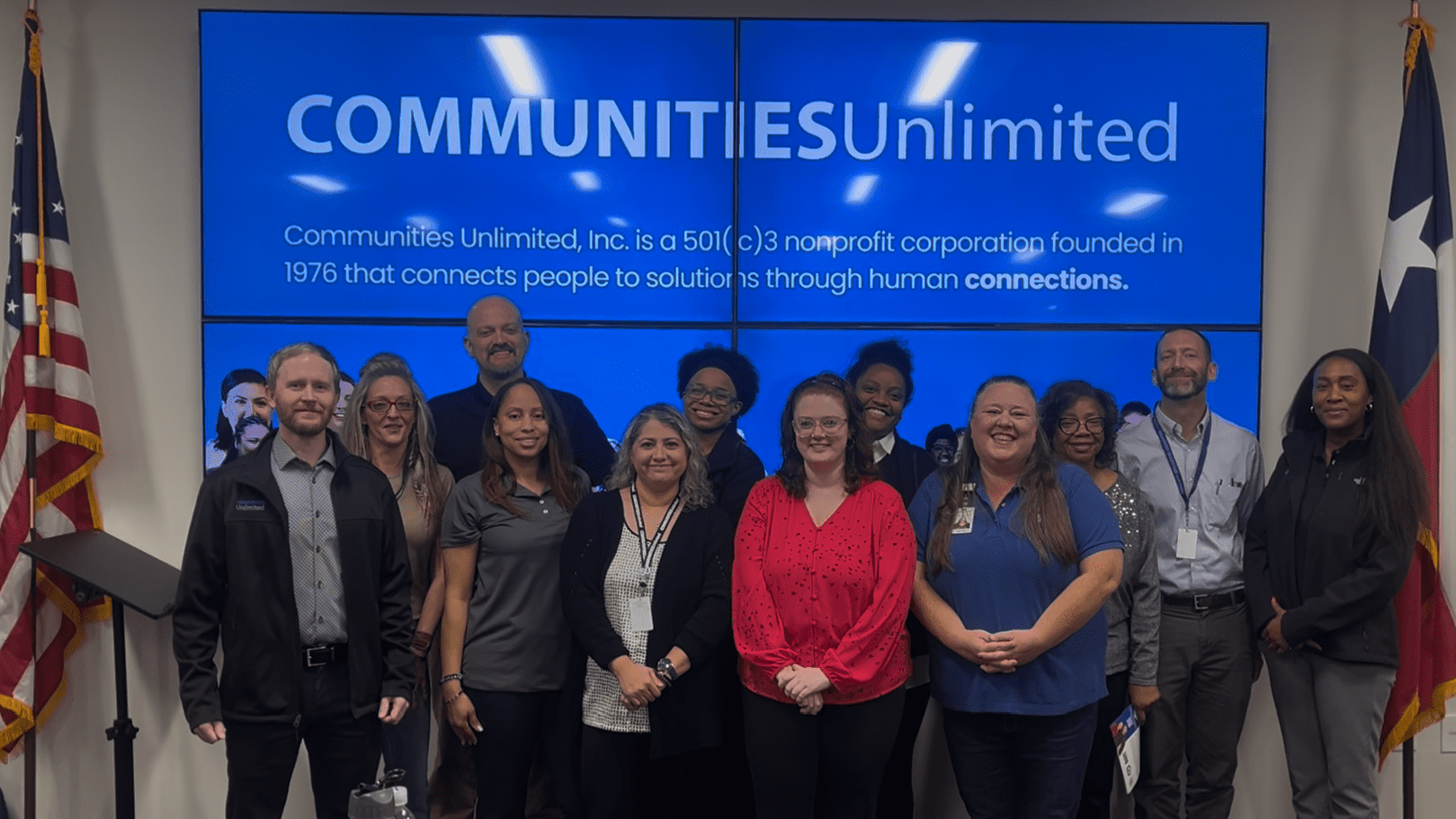
Recognizing that challenge, Communities Unlimited (CU) organized a “Pathways to Partnerships” meeting in October 2025 at the Deep East Texas Council of Governments (DETCOG) office in Lufkin, bringing together county officials, city leaders and regional partners. The session served a dual purpose: helping local governments better understand resources already operating in Deep East Texas and introducing those organizations to each other so connections could happen faster when issues arise.
Through outreach leading up to the event, CU staff met many individuals, organizations and businesses that regularly rely on regional resources and wanted a clearer picture of how CU could support their work. The meeting was designed to turn those conversations into working relationships with local leaders, community champions and potential clients.
DETCOG Executive Director Lonnie Hunt and former Assistant Executive Director Andrew Harmon welcomed the effort and provided the meeting space.
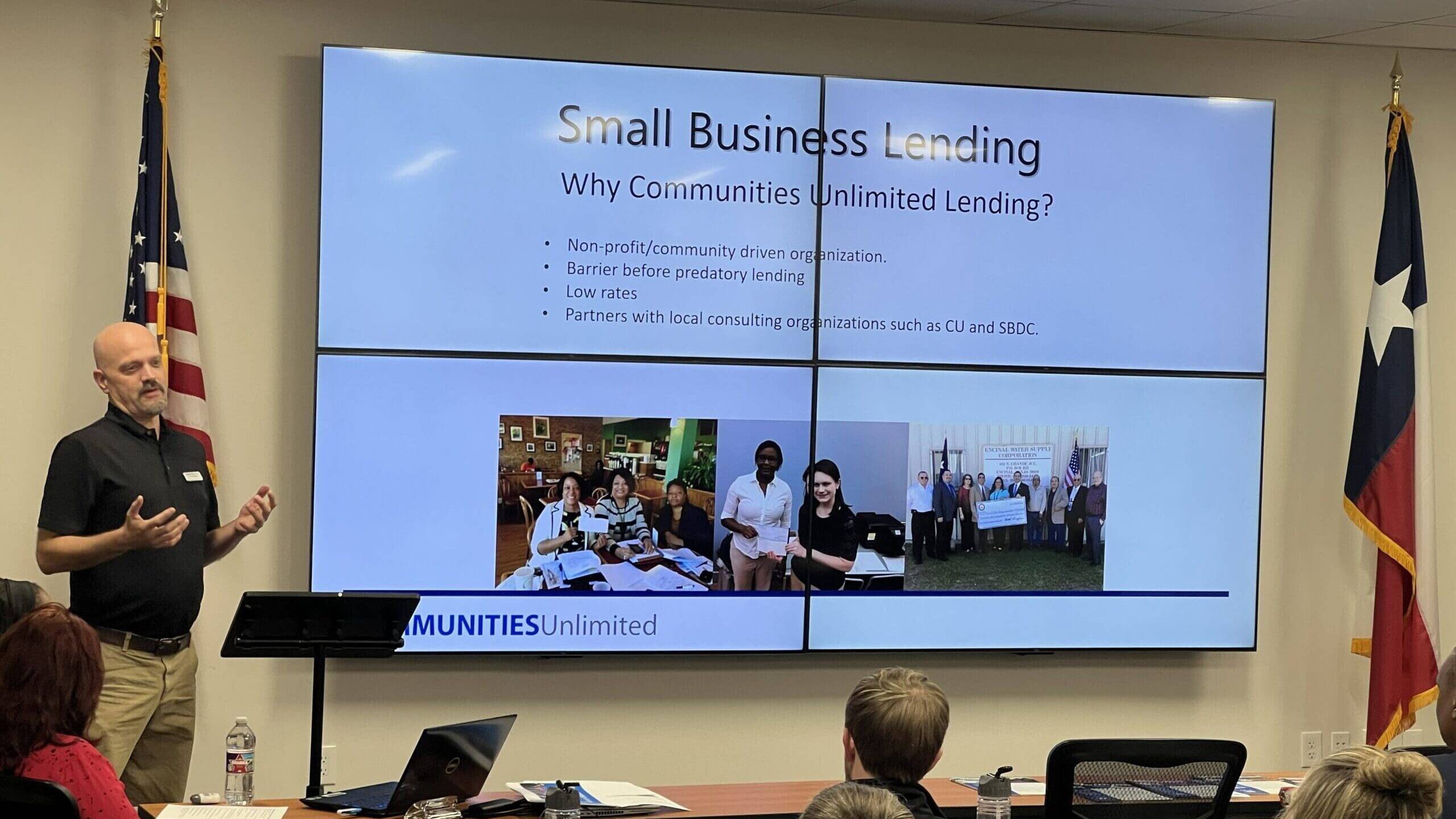
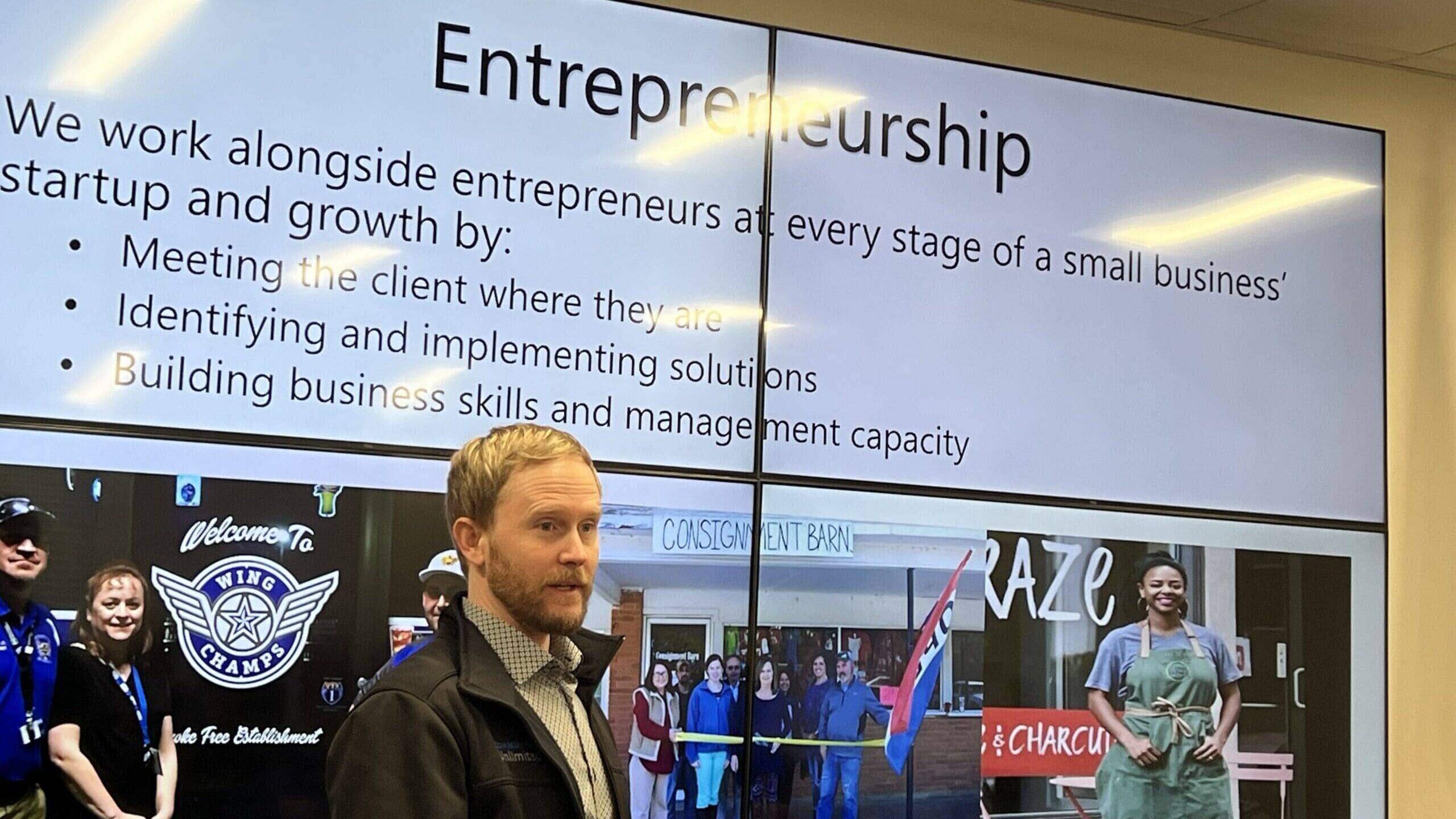
At the meeting, CU staff outlined services across the organization — water and infrastructure technical assistance, housing programs, small-business and lending support, and broader community development and broadband support. What began as an informational meeting quickly became problem-solving. Leaders discovered many offices were facing the same challenges but addressing them separately.
The October meeting grew out of an expanding relationship between CU and DETCOG. The council of governments serves an 11-county region across Deep East Texas, coordinating planning and support for local governments. The area falls within the T.L.L. Temple Foundation’s service region, which supports much of CU’s work in East Texas. The collaboration began around broadband and has since widened into broader community and economic development coordination.
The impact is especially visible in the water sector. Small offices routinely encounter issues such as failing pumps, incomplete infrastructure records, audit requirements and state reporting deadlines. DETCOG can surface needs early and connect communities to CU — whether preparing for an audit, conducting a rate study or mapping infrastructure to support funding applications. In many cases, the introduction itself changes outcomes: rural communities are cautious about unfamiliar outside groups, but a referral from a trusted regional partner builds confidence.
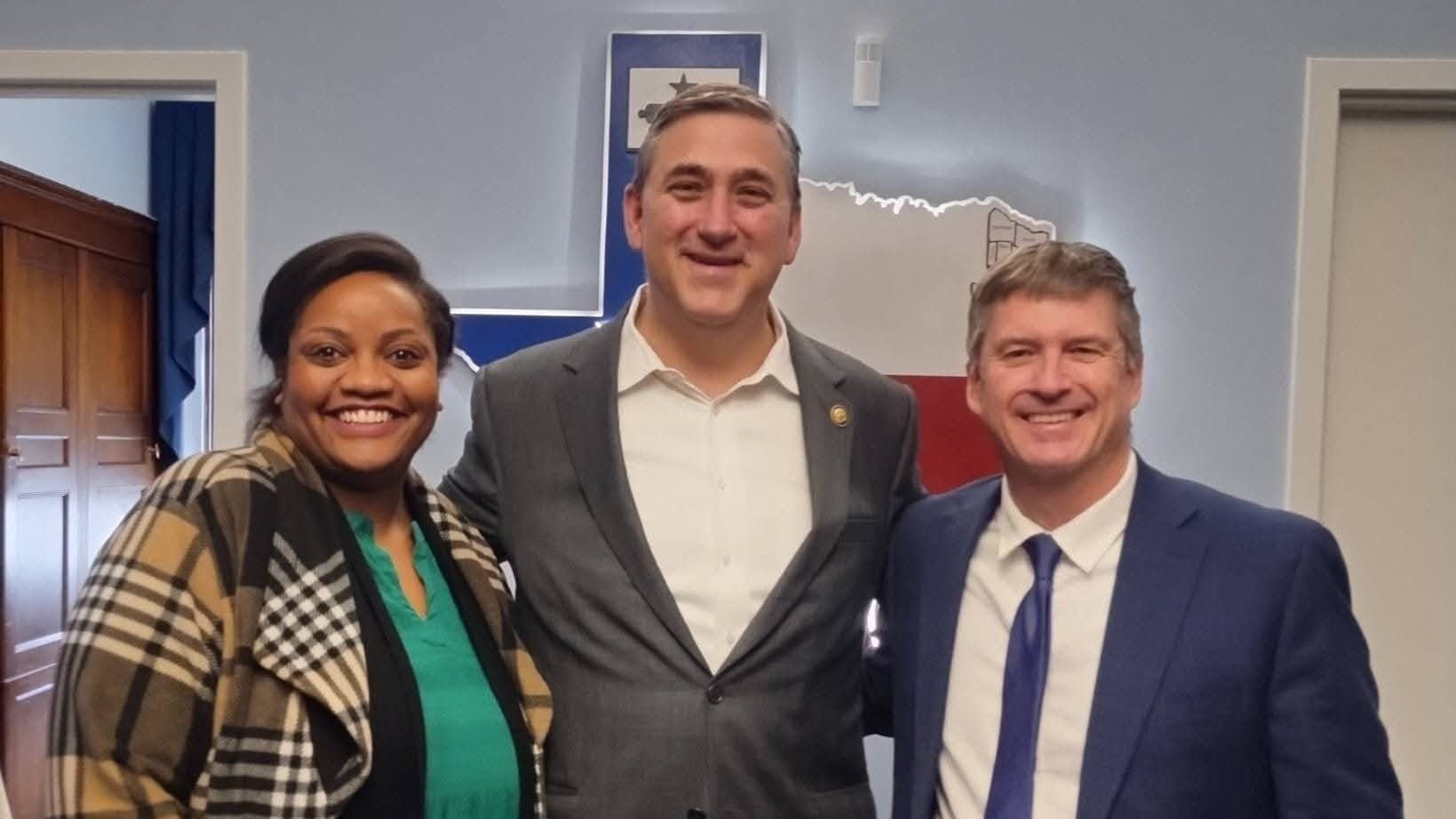
A key driver to this effort is the Economic Recovery Corps (ERC) Fellowship, a 30-month national initiative led by the International Economic Development Council (IEDC) and partner organizations, including the National Association of Counties (NACo). The program places trained professionals in communities to expand economic development capacity. ERC Fellow Muriel Wiley, based with CU’s East Texas Team, connects local leaders to training, national programs and subject-matter experts so communities can act quickly when opportunities appear.
The partnership is also encouraging longer-term planning. One project now underway is a regional real estate and infrastructure mapping platform known as SiteSelect, designed to speed up site-selection decisions and reduce the information gap that often disadvantages rural areas. In the past, when a developer asked about a property, local officials frequently had to call multiple offices — utilities, internet providers, city departments and economic development organizations — just to confirm whether broadband, water, sewer or transportation access existed.
Because time matters to investors, delays can cost a community an opportunity. SiteSelect consolidates those data layers into a single interactive map showing available commercial and industrial properties alongside utilities, broadband availability, workforce information and other development factors. Prospects can quickly evaluate whether a location fits their needs, while local leaders can respond to inquiries with confidence instead of scrambling to gather information. CU also encouraged including rural downtown buildings so small-town main streets can be considered alongside larger industrial sites.

Additional coordination has included helping communities locate emergency warning siren funding, supporting downtown revitalization conversations and participating in early regional tourism planning. The growing relationship demonstrates the value of a clear pathway: instead of navigating agencies alone, local governments gain quicker access to the right contacts and better chances of keeping projects moving.
Harmon, now a Program Officer at the T.L.L. Temple Foundation, said no single organization can address rural challenges alone. Progress depends on connecting communities to the right support at the right time.
“If we rely on a single agency to come in and solve everything, we’re setting ourselves up for failure. But when organizations like CU and DETCOG work together, they can identify local champions and connect people to the right help. One conversation leads to another — maybe to CU CDFI lending, maybe to site-selection assistance — and eventually the pieces come together. That’s the theme: putting the puzzle together.”

— Andrew Harmon, former DETCOG Assistant Executive Director
For CU Senior Community Facilitator Kristy Bice, the partnership expands what small communities can realistically access.
“Through collaboration, we’re not just bringing CU resources to the table — we’re multiplying them by connecting communities with other partners as well,” Bice said. “It fills their toolbox faster and gives them more options than they’d have on their own.”
She noted the barrier is rarely effort. Rural officials often juggle multiple roles, and outreach falls behind daily responsibilities.
“When we help make those connections, provide training and link them to subject-matter experts, it opens doors they might not otherwise reach,” Bice said. “Then it becomes a win-win for everyone involved.”

