


How a Fortified Roof Reversed an Arkansas Insurance Exclusion
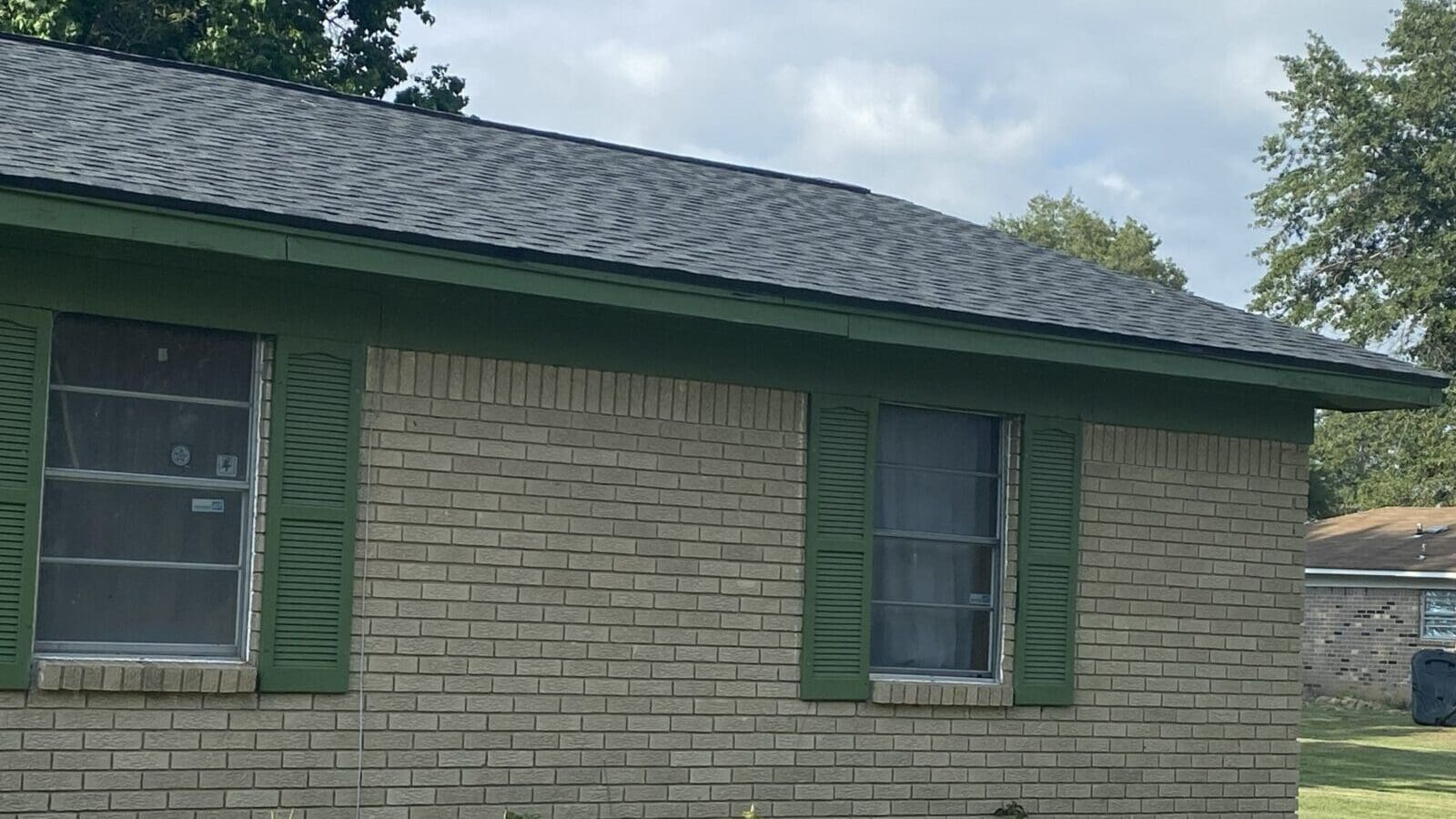
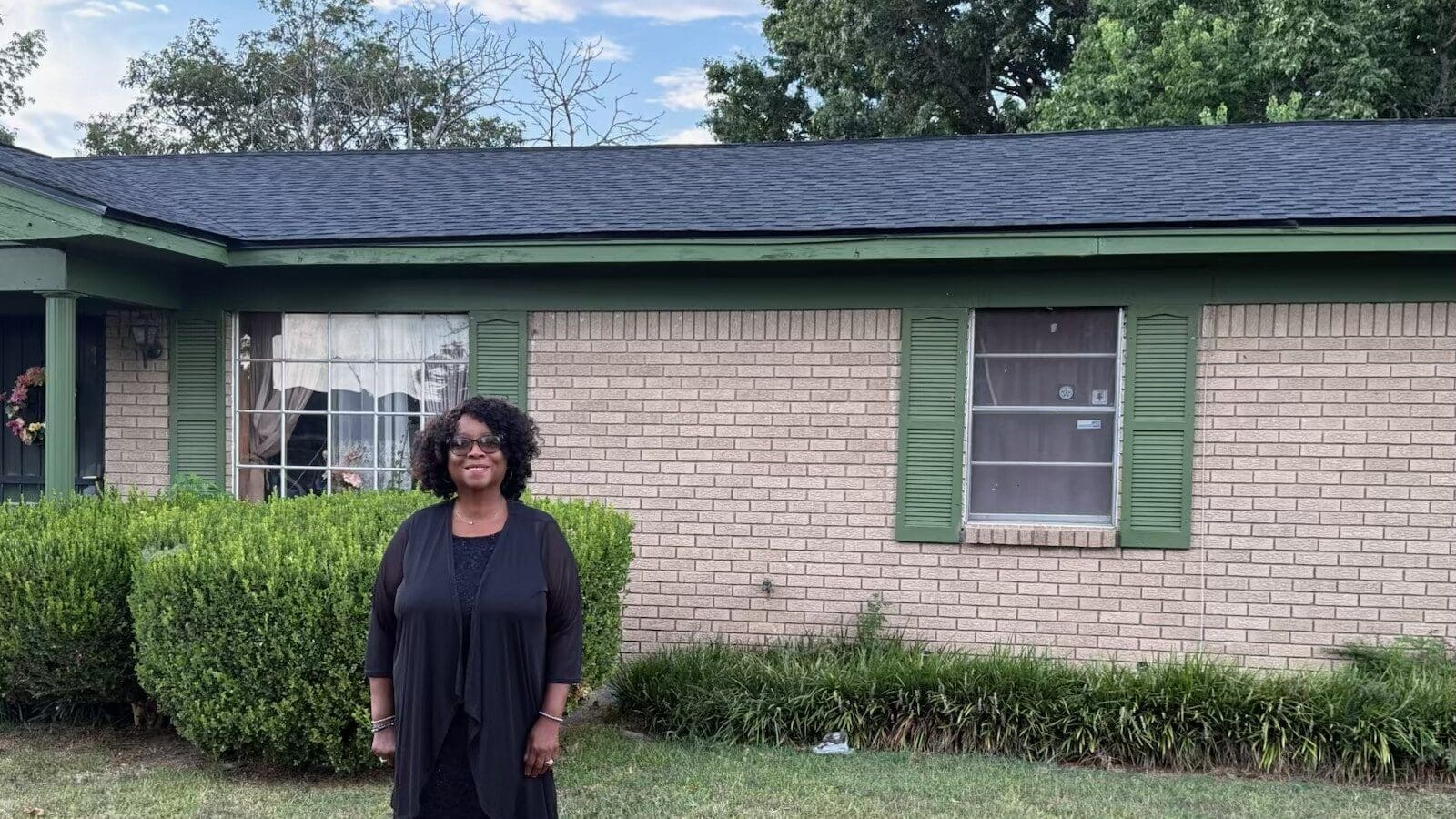
Blanchie Brown got a brand-new roof, built to stand up to the kind of storms that wore out her old one. Her insurance policy still excluded roof damage.
Getting a roof exclusion removed usually takes more than a phone call. Brown’s case shows what it actually took.
City
Dumas
State
County
Desha
District
AR-01
Funding
Department
Outcome
A Leak That Kept Getting Worse
“I was really worried,” Brown said, “because I knew if it kept leaking, it was probably going to fall through.”
When a friend from her church sent her an article about a program that would replace roofs at no cost, Brown looked into it. That decision led her to Communities Unlimited’s (CU) Fortified Roof Program, supported by the Federal Home Loan Bank of Dallas. On August 19, 2025, a crew installed a roof built to a tougher safety standard than her old one ever met.
A New Roof, But the Exclusion Stayed
Her insurer had required a roof replacement before it would cover roof damage again. That was one more reason the no-cost upgrade mattered so much. But letting the company know wasn’t enough on its own to remove the exclusion. Brown called to report her new roof, and her next bill still carried it.
She reached out to Kapriskie Mack, Regional Manager for COME HOME, CU’s community-centered approach to identifying and solving local housing needs. Mack stayed with her through the process of getting the company to reconsider. CU gave Brown a copy of her Fortified roof certification, issued by the Insurance Institute for Business & Home Safety (IBHS), and once her daughter submitted it, the insurer removed the exclusion.
Why the Certification Made the Difference
The certification is what made the difference.
Insurers already recognize Fortified roofs as a real reduction in risk. IBHS research found that most water that gets past a damaged roof ends up inside the house, making the damage far worse. A properly built Fortified roof can cut that water damage by about 95%.
In Arkansas, insurers also offer discounts to homes that meet standards like Fortified. Once the certification reached the right person at the insurance company, it gave them what they needed to remove the exclusion.
“When a storm comes, it could be just a little something, or it could be more,” Brown said. “Having this Fortified Roof gives me peace of mind, knowing I have extra security behind it. And I know a lot of homeowners are struggling with those rising costs and losing coverage every day. It’s good to know I have protection on it for sure now. I appreciate everything Communities Unlimited did for me.”
A Bigger Squeeze on Homeowners
Brown’s experience points to something bigger than one roof. Across the country, rising insurance costs are changing who can stay in their home and who can’t.
Nationally, insurance premiums rose about 70% between 2019 and 2025. By 2025, insurance made up 14% of the average homeowner’s monthly mortgage payment, up from 10% in 2013, according to the Federal Reserve Bank of Dallas. For households that can’t shop for cheaper coverage or move to a lower-risk area, rising premiums drive more credit card debt, more delayed mortgage payments, and in some cases, home loss. Researchers project that premiums could push an additional 203,000 mortgages into delinquency each year between 2025 and 2055.
An Uneven Burden
The burden doesn’t land evenly. Urban Institute research found that average annual insurance premiums rose 46% between 2018 and 2024. By 2024, roughly one in six new homebuyers were spending more than 3% of their income on insurance alone, before their mortgage, taxes, or any other housing cost. Borrowers with lower incomes and weaker credit pay higher insurance rates relative to what their home is worth, a gap researchers say could deepen homeownership inequities over time.
Some of that pressure runs straight through CU’s service area. U.S. Census Bureau data from 2023 placed Louisiana, Oklahoma, Texas, and Mississippi among the 10 states with the highest median annual property insurance costs for mortgaged homes nationwide.
Keeping Families in the Homes They’ve Built
That context is why Brown’s outcome is so rare. It’s why CU treats a program like the Fortified Roof Program, part of Communities Unlimited’s rural housing work, as more than a repair. It’s a way to keep insurance, keep equity, and keep families in the homes they’ve already built a life around.
“The rising cost of insurance is locking people out of homeownership and pushing families out of their homes,” said Audra Butler, CU’s Director of Rural Housing. “Programs like these are about more than fixing a roof. They help us keep families in safe and healthy homes that they can afford and build resilient communities.”
The Bigger Picture
- Fortified roof certification, not just replacement, got the exclusion removed
- Fortified roofs can cut storm water damage by about 95 percent
- Rising insurance costs are pushing families out of homes nationwide
- CU’s service-area states rank among the highest for property insurance costs

